
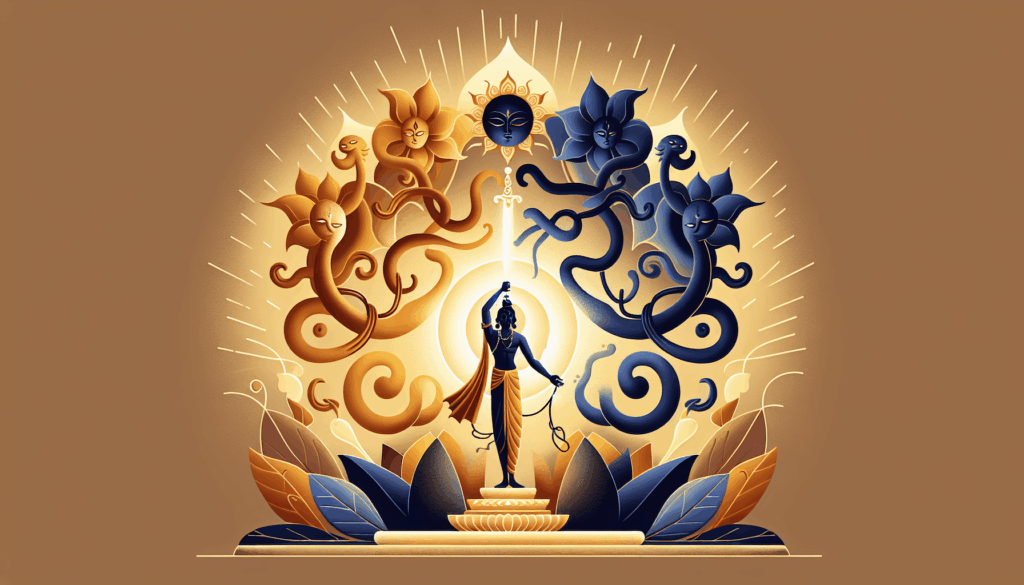
There is a specific type of doubt, known in Sanskrit as Samshaya, that acts as a parasite on the human soul. It is not merely intellectual skepticism, which can be healthy; rather, it is a spiritual hesitation—a swinging of the mind between truth and illusion. In this lecture on the Bhagavad Gita (Chapter 4, Verses 39-43), we explore how to stabilize the mind using the ancient tool known as Jnana-Asi, the Sword of Wisdom.
Deep down, you are eternal. You are constantly enfolded by God. The mind may feel alienated, but the spirit is never separated. Swami Jyotirmayananda offers a profound analogy: Just as the sun cannot reject its own reflection, the Divine cannot reject you. The feeling of separation is merely a “cloud of ignorance” that must be dispersed.
The Myth of the Cave
A common error on the spiritual path is the belief that one must physically retreat from the world to attain enlightenment. Swamiji warns that an “empty mind becomes the devil’s workshop.” If you run to a Himalayan cave without the proper inner preparation (Sadhana), you will simply carry your ego, pride, and attachments with you.
The true victory is won through Integral Yoga—harmonizing your daily actions (Karma Yoga) with devotion (Bhakti) and wisdom (Jnana).
The Anatomy of Faith (Shraddha)
Verse 39 states: “Shraddhavan Labhate Jnanam” (The man of faith attains wisdom). Faith here is not blind acceptance. It is the awakening of Viveka Shakti—the intuitive strength that allows you to discern the Real from the unreal. As this faith blossoms, the mind stops swinging between opposites and becomes capable of holding the Truth.
The Sword of Wisdom
When doubt persists, the intellect becomes dull. We begin to see the “rope as a snake” (Viparita-Grahanam), mistaking illusion for reality.

The Gita provides the cure in Verse 42:
“Therefore, having cut asunder with the sword of knowledge this doubt in your own heart, which is born of ignorance, be established in Yoga.”
This sword is sharpened by daily reflection, study, and the persistent practice of Abhyasa (effort) and Vairagya (dispassion).
Scholar’s Corner: Scriptural Citations
- Bhagavad Gita 4.39: Śraddhāvān labhate jñānaṁ… (He who has faith attains wisdom).
- Bhagavad Gita 4.40: Ajñaś cāśraddadhānaś ca… (The ignorant, the faithless, and the doubting self go to destruction).
- Bhagavad Gita 4.42: Tasmād ajñāna-sambhūtaṁ… (Therefore, cut this doubt with the sword of wisdom).
Glossary of Terms
- Shraddha: Dynamic, intuitive faith.
- Samshaya: Spiritual doubt; a wavering state of mind.
- Viveka: Discrimination between the Self and non-Self.
- Vairagya: Dispassion; detachment from the transient.
- Abhyasa: Persistent spiritual practice.
Watch the full lecture here: https://youtu.be/ZHPrXmrwiPk
Join the Digital Ashram: https://bit.ly/4dgDWKn
This study guide is drawn from the archived teachings of Sri Swami Jyotirmayananda.