
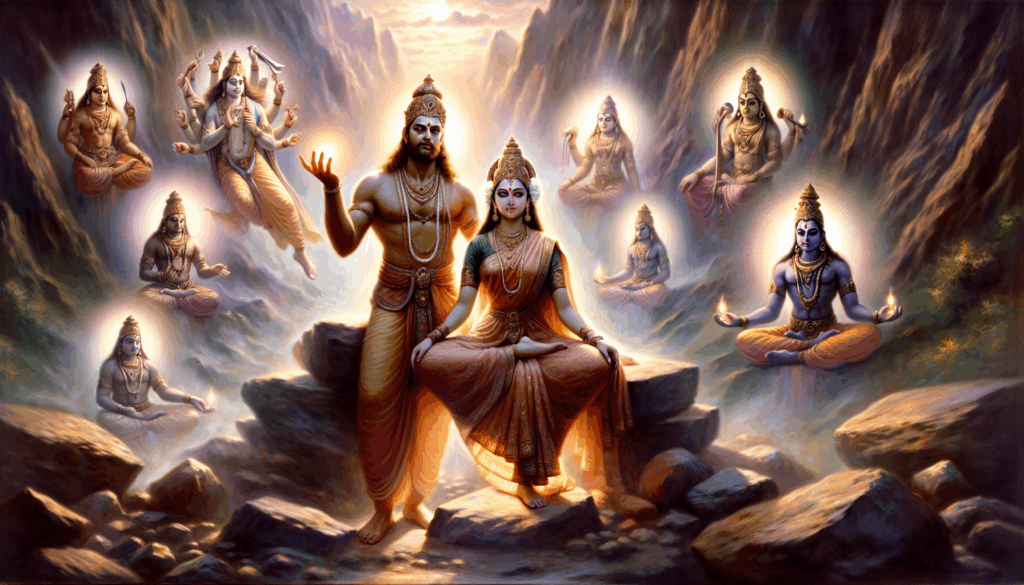
When the mind feels heavy with the endless demands of the material world, we often seek temporary solutions to our stress and anxiety. We look for quick relief in the realm of time and space. However, true peace blossoms only when we shift our focus toward the Absolute. Sri Swami Jyotirmayananda, a direct disciple of Swami Sivananda, offers a profound explanation of the highest form of devotion through the story of Manu and Shatrupa in the Ramcharitmanas.
In the Balakanda, King Manu and his wife Shatrupa are recognized as the ancestors of humanity, but their mystical significance is far deeper. Manu is symbolic of the cosmic mind existing under limitation, while Shatrupa represents the myriad feelings and colors of that mind. In the final stage of their lives (Vanaprastha Ashrama), they withdrew from worldly activities to practice intense austerity.
This sustained practice is allegorically described as standing on one foot or enduring harsh weather unshaken. As Swamiji explains, every profound attainment—whether Sattvika, Rajasika, or Tamasika—requires unyielding practice. The same mental endurance that negative habits use to persist from lifetime to lifetime must be applied to positive spiritual discipline.
Sakamya Worship vs. Nirguna Upasana
Because of their immense devotion, various deities appeared before Manu and Shatrupa to offer boons. Brahma, Vishnu, and Shiva arrived, but the royal couple remained entirely focused. Their goal was not to receive a blessing confined to the limits of time and space, but to attain ultimate liberation.
Swamiji highlights a vital distinction here: Sakamya worship is worship driven by a desire for worldly fulfillment. It directs the mind to the Saguna (with form) aspect of God to acquire wealth, pass exams, or remove adversities. However, even the greatest worldly fortune is bound by time and space. By contrast, Nirguna Upasana recognizes that practical help is necessary, but the ultimate aim must be liberation from the cycle of birth and death. Thousands of worldly boons cannot equate to the realization of Brahman.
The Divine Form of Lord Rama
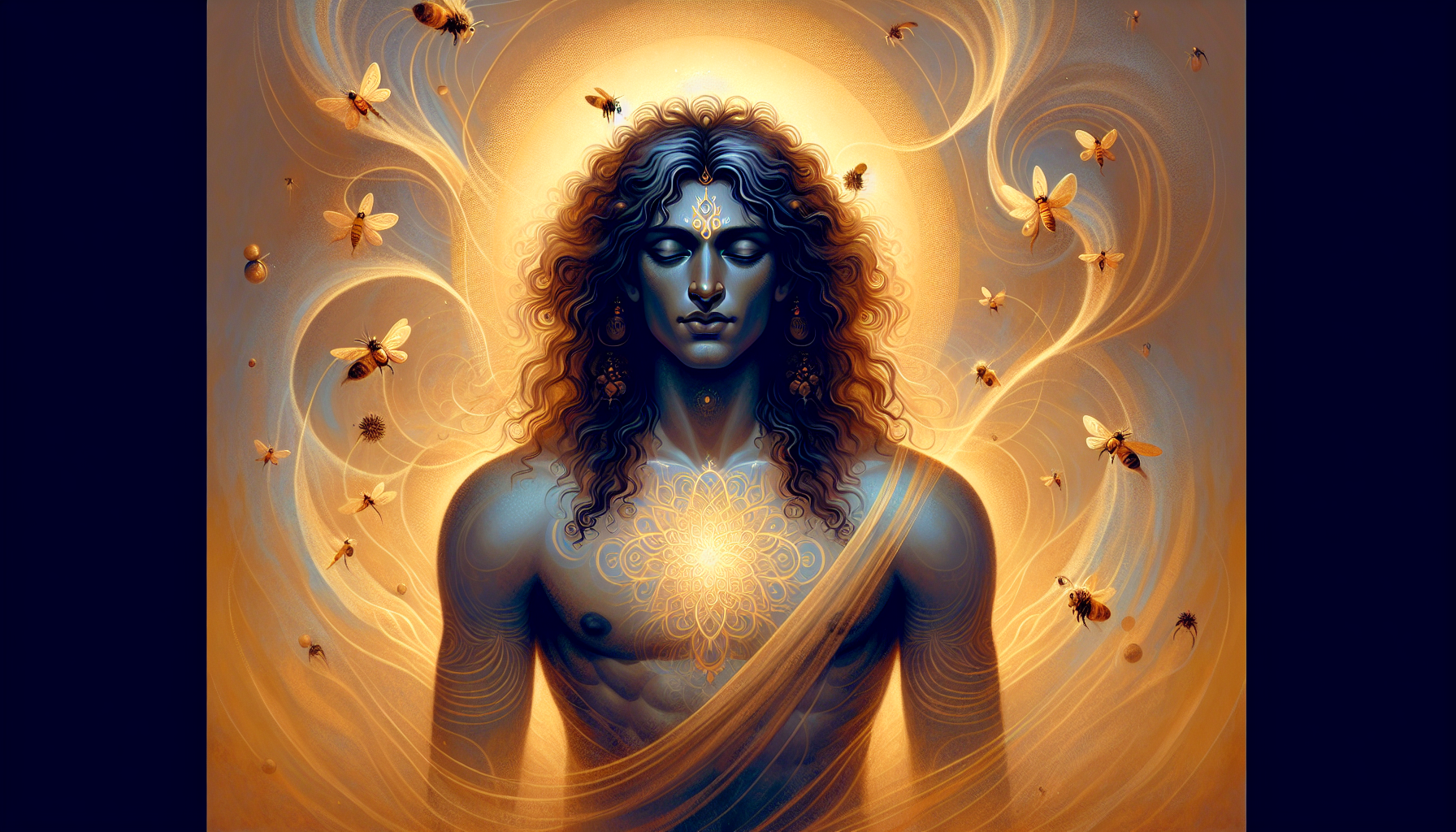
When Lord Rama finally appears before them, Tulsidas provides a beautiful, highly symbolic description of His form leading up to Doha 147. His curly hair is likened to a swarm of bees, illustrating that the Lord holds all the sweetness of the universe, and devoted minds are the bees drawn to Him.
His broad shoulders are compared to a lion, which represents Jnana (wisdom). Just as a lion’s roar silences the howling of lesser animals, the Vedantic realization of “Aham Brahmasmi” (I am Brahman) silences the countless croaking doubts and anxieties of the worldly mind. The Lord also wears the Yajnopavita (sacred thread), an eternal reminder to align body, speech, and mind (Manasa, Vaca, Karmana) toward the realization of Sat-Cit-Ananda (Existence-Knowledge-Bliss).
Sage Bhrigu’s Test and the Mark of Shrivatsa
On the Lord’s chest rests the mark of Shrivatsa. In a beautiful allegorical digression, Swamiji recounts the story of Sage Bhrigu testing the Trimurti (Brahma, Shiva, and Vishnu). When Bhrigu haughtily kicked Lord Vishnu in the chest, the Lord did not react with anger. Instead, He expressed concern that His hard chest might have injured the sage’s foot.
This profound forgiveness left a permanent mark on His chest. Saintly beings, Swamiji notes, hold this same expansive heart. Even when receiving injuries, they extend grace, transforming enemies into divine friends.
Cultivating Vatsalya Bhava
When offered a boon by the Lord, Manu and Shatrupa asked for something incredibly profound: they wished for the Lord to become their son. This request is an expression of Vatsalya Bhava, the spiritual attitude where the devotee loves God with the tenderness a parent feels for a child.
In this state of divine love, selfishness completely dissolves. The mind stops projecting its anxieties onto the screen of consciousness. When one sentiment of pure devotion is perfected, all other virtues naturally align, bringing the soul to ultimate liberation.
Scholar’s Corner: Scriptural Citations
- Text: Ramcharitmanas (Tulsi Ramayana)
- Section: Balakanda, Doha 147
- Vedantic Reference: Aham Brahmasmi (I am Brahman) — Foundational Mahavakya illustrating the lion’s roar of Jnana.
Glossary of Sanskrit Terms
- Sakamya
- Actions or worship performed with a desire for worldly results.
- Nirguna Upasana
- Meditation upon the formless, absolute aspect of the Divine.
- Yajnopavita
- The sacred thread symbolizing spiritual discipline and resolve.
- Shrivatsa
- The divine mark on Lord Vishnu’s chest, representing ultimate grace and the beloved presence of Lakshmi.
- Vatsalya Bhava
- The devotional attitude of loving God as one’s own child.
YouTube URL: https://youtu.be/x7gVFqcXDg
Join the Community: https://bit.ly/4dgDWKn
This study guide is drawn from the archived teachings of Sri Swami Jyotirmayananda.