

There is a moment in every sincere spiritual practice when something genuine happens. The mind quiets. The mantra deepens. A temptation arises and, against all expectation, passes without grip. It is a real victory. And in that very moment, the teaching of Tulasidasa is most relevant: who do you give the credit to?
In Balakanda, doha 124, Sage Narada sits in samadhi in a Himalayan cave. Kamadeva, the God of passion, comes with every tool at his command: enchanting music, celestial nymphs, magical spring blossoms, fragrant breezes. Narada remains unmoved. Lord Vishnu, unseen, is simply protecting His devotee.
What happens next is the real story.
Sri Swami Jyotirmayananda, teaching this passage on July 28, 2017, saw in it a mirror for every aspirant. “Success becomes a terrible temptation,” he said. “The ego takes responsibility: ‘How great a Mahatma am I?’ And that becomes the biggest obstacle to spiritual movement.”
Tulasidasa describes three gifts that come to the devoted heart:
- Bhajana: singing the glory of God; experiencing the subtle mystic taste of Divine love.
- Bhojana: spiritual nourishment; all that enriches the deeper Self.
- Bhanjana: liberation; breaking the wheel (bhava-cakra) of birth and death.
“As long as the malas dominate the mind, you do not enjoy the love of God. You do not enjoy bhajana, kirtana, shravana. But as the mind gains purity, the mantra becomes vibrant and powerful,” Swamiji teaches.
What Is Aparadha?
Aparadha is not merely “fault.” It means obstruction to aradhana, the perpetual flow of worship toward God-realization. Life itself is meant to be aradhana, a constant movement toward the Divine. Anything that blocks this flow, whether it is anger, pride, or carelessness, is aparadha.
This is why Narada’s story carries such weight. His aparadha was not immorality or laziness. It was pride in his own spiritual achievement. He forgot that God’s Grace was the source of his victory, not his own effort.
The Wheel of Bondage: Bhava-Vyadhi
Swamiji describes the mechanism of bondage:
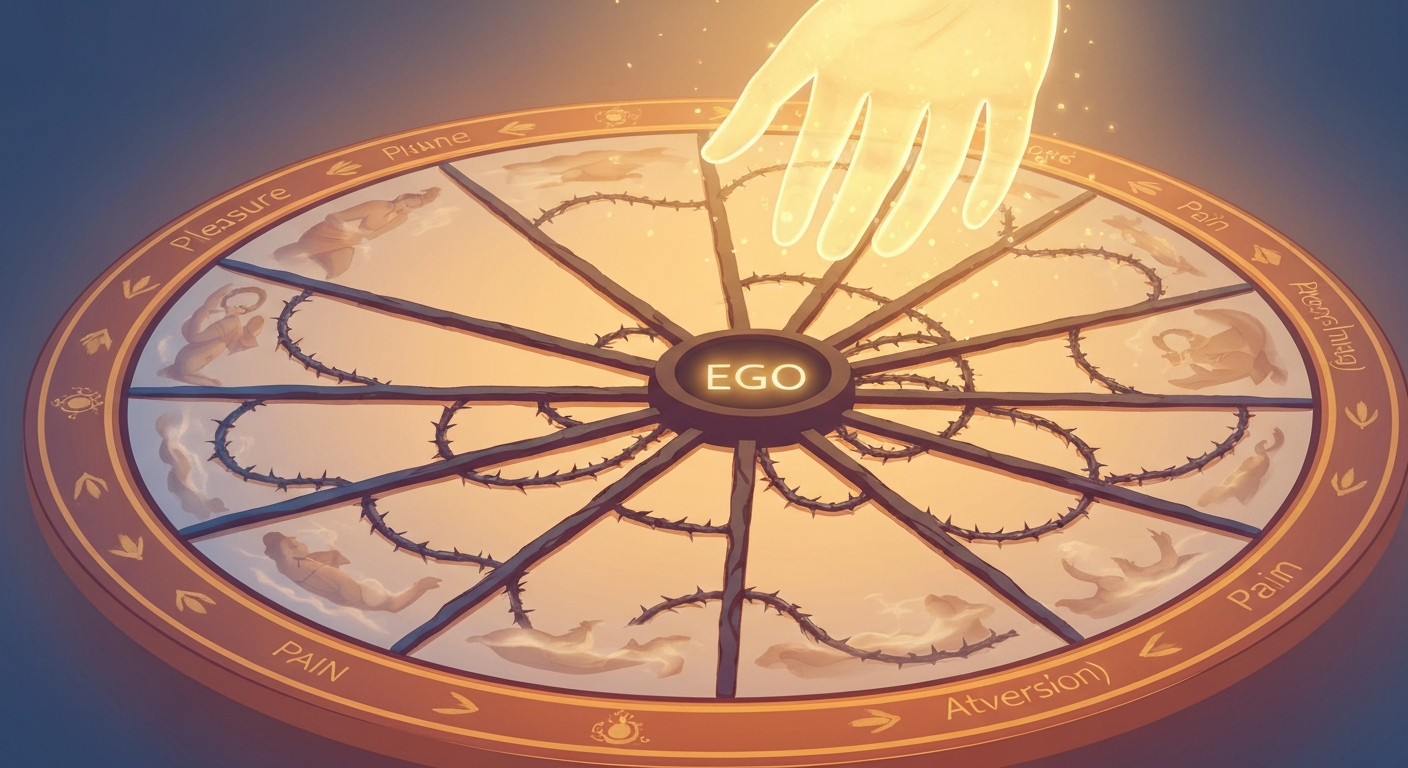
- Virtue and vice create pleasure and pain.
- Pleasure creates attachment (raga); pain creates aversion (dvesha). These are the spokes of the wheel.
- Ego is the axle.
This entire mechanism is what Tulasidasa calls bhava-vyadhi: the disease of the world-process.
And what is the cure? God alone. “God is the only doctor for this disease,” Swamiji says. No amount of worldly skill or effort can cure what only Divine Grace can heal.
All Souls Are Brahman
Lord Shiva, teaching Parvati, reveals the transcendental view: all Souls are Brahman. There is no difference between one jiva and another at the deepest level. The appearances of high and low, wise and ignorant, are plays of Maya.
This is the teaching Narada forgot. After conquering Kamadeva through the silent protection of Lord Vishnu, Narada believed he had achieved something on his own. He went first to Indra’s court to announce his triumph, then to Lord Shiva.
Lord Shiva, seeing what was happening, warned him gently: “Do not speak of this to Lord Vishnu.” But Narada could not contain himself. He went straight to Vishnu and boasted.
The maya of Rama is mighty. Even Narada, devotee and jnani, was not exempt.
The Warning for Every Aspirant
The lesson is not that spiritual practice is futile. The lesson is that the moment of victory is the moment of greatest danger. When the mind is purified, when the mantra comes alive, when temptation loses its grip, the ego can quietly claim the credit. And that subtle claim is the seed of the next fall.
“Watch the mind,” Swamiji counsels. “Every victory in sadhana is God’s victory through you. The moment you claim it as yours, you have lost the ground you gained.”
This is why Tulasidasa tells Narada’s story in the Balakanda. It is not a story about a sage who failed. It is a story about the nature of ego itself, and how even the highest achievements of the spiritual life can become traps when we forget the source.
Words by Sri Swami Jyotirmayananda, the last direct disciple of Swami Sivananda.
Watch the full lecture: https://youtu.be/irn9fPeP8io
This study guide is drawn from the archived teachings of Sri Swami Jyotirmayananda.