From the Archives of Swami Jyotirmayananda
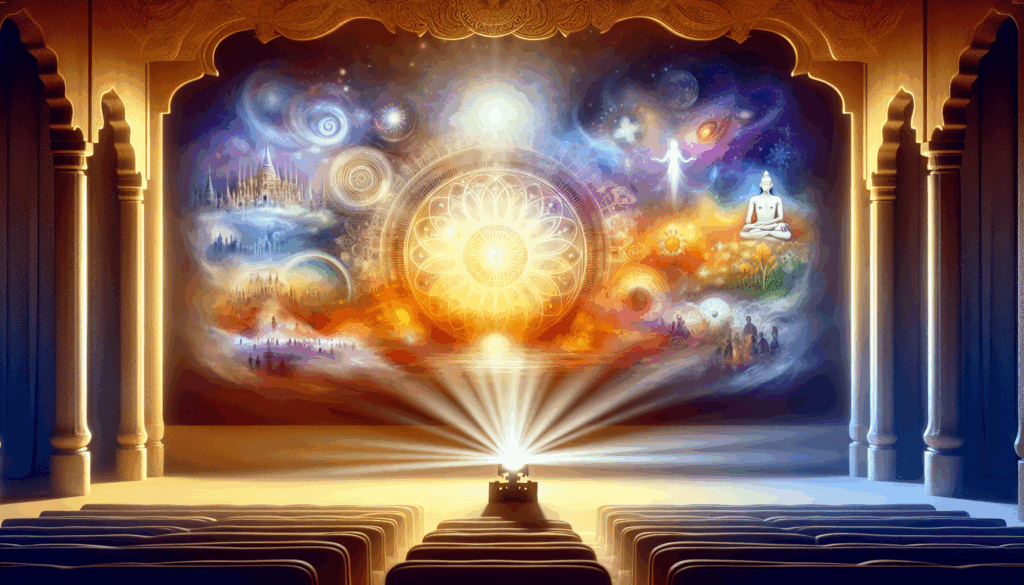
There is a moment in the cinema when the film ends and the projector keeps running. The screen, suddenly bare, holds nothing but light. Sri Swami Jyotirmayananda, the last direct disciple of Swami Sivananda, has spent decades pointing to that bare screen.
In this session from the Yoga Vasistha, Upaśama Prakaraṇa, he opens a section known as the Siddha Gita: the Song of the Siddhas. The teaching is profound yet simple: strip away every projection, and what is left is the Self.
The Siddha Gita opens with a captivating scene. King Janaka, ruler of Videha, a man of immense wealth and power, chooses to sit alone. He sends his attendants away, finds a fragrant garden with a cool, gentle breeze, and allows his mind to settle. In that profound stillness, he begins to hear something extraordinary: the whispers of the Siddhas, enlightened souls whose very nature is liberation.
Swamiji points out what makes Janaka truly remarkable. It is not his vast kingdom or his power. It is that with all his influence, there is no ego inflation; only ego sublimation. This humility in one who has everything is among the rarest of qualities. That profound openness is precisely what allows the Siddhas’ whispers of ultimate truth to reach him.
The Cinema Screen and the Nature of Experience
The first teaching the Siddhas offer is one of the most elegant and accessible in all of Vedanta. Imagine your mind, much like a cinema projector, throwing images onto the pure screen of Consciousness. Time, space, causation, the entire intricate story of your life – these are all projections. You watch them with full conviction, experiencing joy, grief, and constantly reaching for comfort.
Yet, behind every single frame of that film, the screen never changes. It remains pristine, untouched by the drama unfolding upon it.
“Behind all those projections,” Swamiji says, “the reality is nothing but the screen. When projections stop, what you are watching? Just the screen.”
This perspective is far from pessimistic. In fact, it represents the most radical form of optimism. If the screen is what you truly are, then every passing joy and sorrow simply moves across you without ever touching your core. You were never the film; you were always, eternally, the screen.
The Sun and Its Countless Reflections
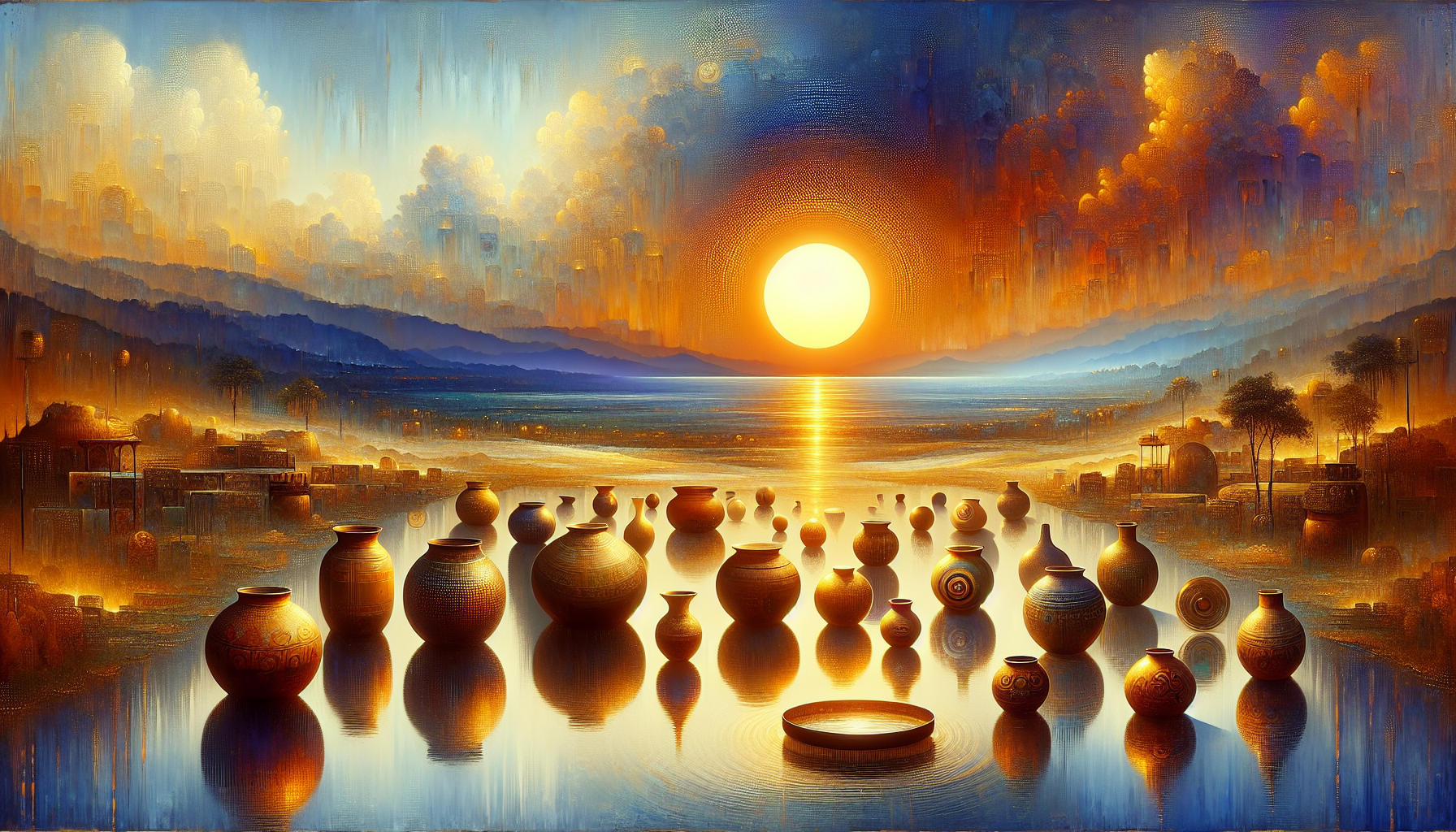
Swamiji deepens this profound teaching with a second powerful image: the sun reflected in countless pots of water. Each reflection appears to be a separate sun, seemingly bounded, individual, and at the mercy of the weather. But in reality, there is only one sun.
The countless reflections are the jivas, the individual souls, each perceiving itself as distinct. The sun itself is the Absolute Self: Atman, Brahman, the non-dual reality that underlies all existence.
The spiritual path, Swamiji explains, is the journey from identifying with the reflected-sun to recognizing the Sun itself. Inquiry into the fundamental question, “Who am I?”, first leads to the realization of the soul illumining your personality. But keep going. What is that soul? It is the Divine Self, reflecting in your mental waters. As you purify the mind, the distinction between the reflection and the sun begins to beautifully dissolve.
The Five Sheaths and the Light of Lights
For those who seek a more structured map of the inner landscape, Vedanta provides one: the Pancha Kosha, or the five sheaths that layer the personality. Swamiji meticulously walks through each:
- Annamaya Kosha: The physical body (the food sheath).
- Pranamaya Kosha: The vital sheath (life force, breath).
- Manomaya Kosha: The mind (thoughts, emotions).
- Vijnanamaya Kosha: The intellect and ego (discernment, individuality).
- Anandamaya Kosha: The deep unconscious (the bliss sheath).
Beneath all five, utterly untouched by their changing nature, resides the pure, unblemished Self.
Each state of consciousness – waking, dream, deep sleep – corresponds to one of three bodies. The Upanishads ask: who is the experiencer behind all this? The answer comes not as a definition, but as a profound pointer: find the light of lights. The sun illumines the earth, but what illumines the sun? That ultimate source, the Absolute, is what you truly are.
What the Siddhas Actually Say
The verses the Siddhas whisper to King Janaka are strikingly direct and potent:
“We resort to the Witnessing Self: the embodiment of wisdom and bliss. It is He who manifests as the experiences of pleasure and pain, reflecting in the outgoing modes of the mind.”
And then, the profound resolution:
“Having renounced the illusory triad of seer, seen, and sight, we take refuge in the underlying Self.”
Seer, seen, and sight (subject, object, and the act of experience) are the three fundamental components of every single moment of waking life. In a dream, all three appear equally vivid, yet are recognized as equally unreal upon waking. Vedanta invites you to consider: what if the same truth applies to your current waking experience?
The Long Dream and the Living Question
Swamiji eloquently calls ordinary life a dhirgha-svapna: a long dream. While the waking state certainly possesses greater consistency than a night dream, the underlying mechanism is identical: pure Consciousness projecting a world through the intricate apparatus of the mind.
This teaching is not meant to dismiss life or render it meaningless. On the contrary, it is meant to free you within it. If you truly know that you are the screen and not merely the film, you can watch the unfolding drama of existence with what Swamiji calls equanimity. This is not a detachment that withdraws from life, but a profound groundedness that allows for full, vibrant participation without ever being swept away by its transient currents.
Scholar’s Corner
Scriptural Citations:
- Yoga Vasistha, Upaśama Prakaraṇa: Siddha Gita (source text for this lecture)
- Yoga Sutras 1.3:
tadā draṣṭuḥ svarūpe ‘vasthānam
— “Then the seer rests in its own nature” - Mandukya Upanishad: description of turiya, the fourth state beyond waking, dream, and deep sleep
- Bhagavad Gita 6.32:
yo māṃ paśyati sarvatra
: “One who sees Me everywhere” - Taittiriya Upanishad:
yato vā imāni bhūtāni jāyante
— “That from which all beings arise” - Brahmananda Stotram (opening chant):
brahmānandaṃ parama-sukhadaṃ kevalaṃ jñāna-mūrtim
Glossary
- Siddha: Enlightened being; one who has attained liberation through spiritual practice.
- Siddha Gita: Song of the Siddhas; the section of Yoga Vasistha in which enlightened souls whisper Truth to King Janaka.
- Chidakasha: The space of pure Consciousness; often rendered as the “screen” on which all experience appears.
- Pancha Kosha: Five sheaths layering the Self: annamaya (food/body), pranamaya (vital), manomaya (mind), vijnanamaya (intellect/ego), anandamaya (deep unconscious/bliss).
- Sakshi: The Witnessing Self; pure Awareness that observes without being affected.
- Dharma: Ethical and righteous action; the foundation of a life aligned with Truth.
- Artha: Material resources; wealth and power used in the service of Dharma.
- Kama: Vital desire; when purified, it becomes aspiration for God-realization.
- Moksha: Liberation; the fourth and highest value of human life.
- Jiva: The individual soul; the reflected sun in the pot of water.
- Atman: The individual Self; realized to be identical with Brahman.
- Brahman: The Absolute; the single, non-dual Self underlying all existence.
- Moha: Deluded attachment; one of the six inner enemies (ṣaḍ-ripus) that cloud the mind.
- Dhirgha-svapna: The long dream; Vedantic description of ordinary waking existence.
- Sad-ripu: The six enemies of the soul: desire (kama), anger (krodha), greed (lobha), delusion (moha), pride (mada), and envy (matsarya).
Continue Your Journey
Watch the full lecture here: https://youtu.be/41317rbecZo
Join the Digital Ashram: daily wisdom, live Q&A, and access the full archive:
Support the Jnana Yagna: help keep these transformative teachings free for all: