From the Archives of Swami Jyotirmayananda
There is a moment in the Rāmacaritamānasa that should stop us cold.
Sage Nārada, one of the great sages of the cosmos, had just achieved a seemingly impossible feat: he defeated Cupid himself. He stood unmoved while Kāma attacked with full force, a challenge even Lord Śiva had to overcome by burning Kāma to ashes. By any measure, Nārada had won a profound spiritual victory.
And yet, that very victory became his undoing.
Sri Swami Jyotirmayananda, the last direct disciple of Swami Sivananda, masterfully unravels this subtle teaching in Highlights Lesson 69, a lecture recorded at the Yoga Research Foundation on August 11, 2017. Drawing from the Bālakāṇḍa, Dohā 132 of Śrī Rāmacaritamānasa, the lesson poses a fundamental question many of us have never considered: when you believe your mind is truly free, who is actually holding its reins?
After subduing Kāma, Nārada generously forgave him. But quietly, insidiously, he could not stop thinking about his triumph. A subtle inflation of ego began to take root. He had accomplished what even Śiva had struggled with. This thought followed him, first to Brahmā’s court, then to Śiva’s, and finally to Viṣṇu’s. Each time, he found a way to subtly raise the subject, and each time, his ego fed on the praise, real or imagined.
Lord Viṣṇu observed this growing pride. Rather than correct Nārada with mere words, He devised a powerful demonstration. Viṣṇu created a māyā – a magical city, a grand svayaṁvara (a ceremony where a woman chooses her husband), and a princess of such unparalleled beauty that Nārada immediately forgot everything he had supposedly conquered.
Swamiji precisely names this enchanting princess: Viśvāmohini, “she who deludes the world.” She is not merely a character in a story; she embodies viveka-buddhi, the faculty of discrimination that ultimately leads to liberation. And by her very nature, she will marry only the Self, never the not-self.
The Monkey Face
What transpired next is both humorous on the surface and devastating in its deeper meaning. Lord Viṣṇu bestowed upon Nārada the face of a monkey, while leaving his body otherwise untouched. Swamiji explains the profound symbolism plainly: when your intellect (the head) becomes brilliant and capable, but your heart and actions (the body) pull in a completely different direction, the entire personality becomes discordant. It becomes awful, not awesome. It is not integrated, not whole.
This imagery echoes the myth of Rāhu and Ketu, where the head is separated from the body after the demon Svarbhānu drank the nectar of immortality. Swamiji connects this ancient symbolism to a stark reality we observe in modern life: professionals who think without feeling, workers who act without understanding. We see a society of heads without hearts, bodies without minds.
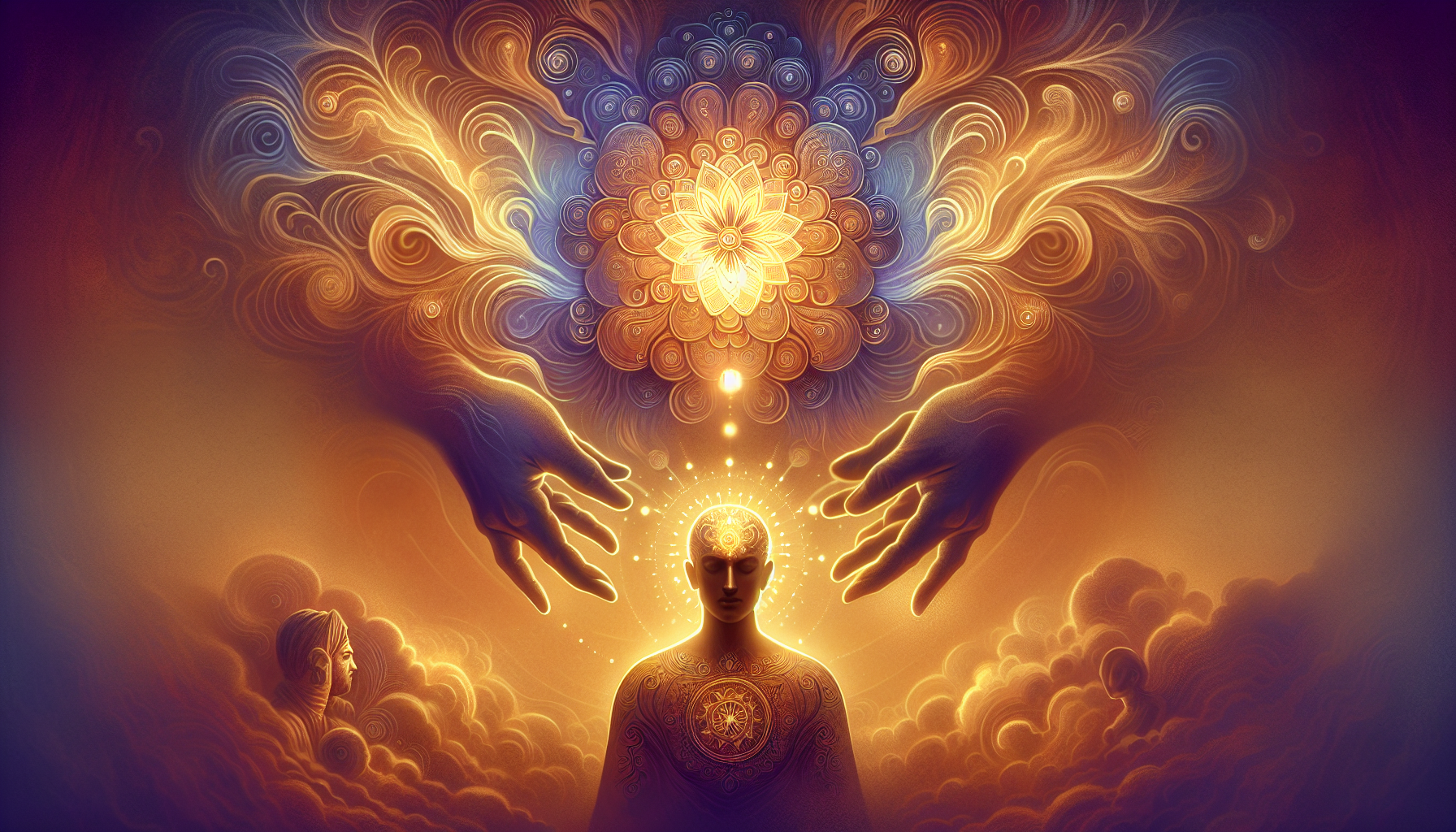
The integration of knowing and living is the entire purpose of sādhanā (spiritual practice). Without this essential harmony, viveka-buddhi—true discrimination—will inevitably turn away.
Is Your Mind in Your Hands?
This is where Swamiji delivers the core teaching that gives this profound class its title:
“His mind was not in his own hands. His mind was under control of others’ hands.”
He is speaking of Nārada, but the application is universal.
If your mind is consistently drawing you toward liberation, toward clarity, toward renunciation, toward what is true, then that mind is truly yours. You hold it. It is working for your highest good.
However, if your mind is serving the āsurī sampat – the negative and demoniac qualities within you, such as pride, envy, lust, or anger – then that mind is decidedly not yours. It belongs to the not-self, the “naughty self,” as Swamiji says with his characteristic lightness that carries immense spiritual weight.
This is not a mere metaphor. It is a precise description of two distinct conditions of the same mind, serving two very different masters.
The Three Knots
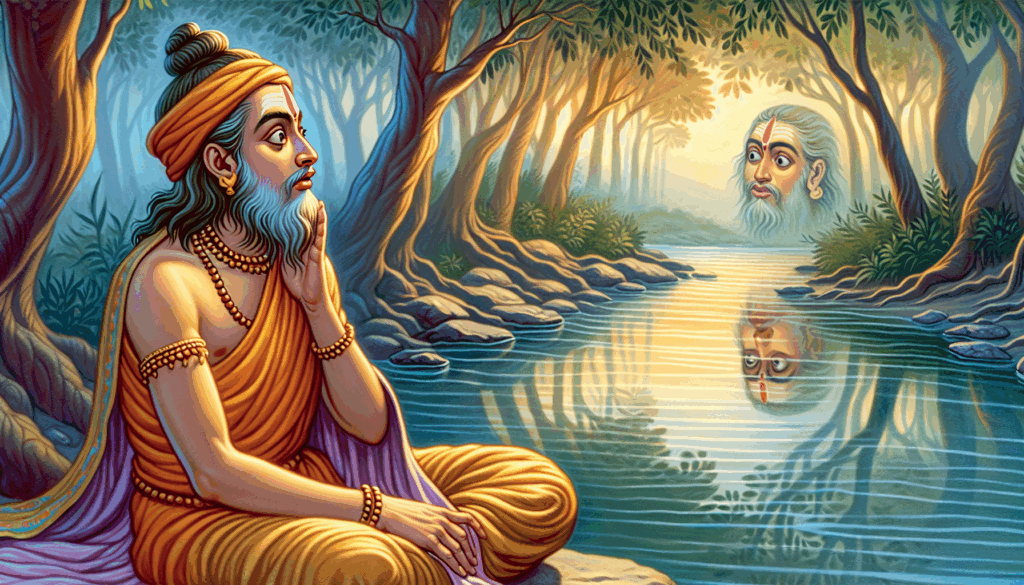
When the princess Viśvāmohini chose Viṣṇu and departed, Nārada’s rage was immediate and intense. He looked into the water and saw his monkey face. He cursed the messengers who had shown him the truth. And consumed by fury, he marched directly toward Viṣṇu, intending to curse Him as well.
Swamiji pauses here to describe Nārada’s deeper experience: the painful loosening of a spiritual knot that had tied him to something he never truly possessed. This becomes a powerful teaching on the three knots of the heart: avidyā (ignorance), kāma (desire), and karma (the identification with one’s physical nature). These three knots bind ātmajñāna, the knowledge of the Self, so completely that “all that you get is the knot.” The precious jewel of Self-knowledge is there, but it remains unreachable.
Returning to the narrative, Viṣṇu calmly meets Nārada on the road and softly asks, “Where are you going?” This gentle question, far from calming Nārada, pushes him completely over the edge. Māyā basa na rahā mana bodhā – under the powerful grip of māyā, his mind lost all discrimination. He accused Viṣṇu of jealousy, conceit, and manipulative behavior.
Swamiji quietly notes that, from another sacred perspective, every accusation Nārada hurled was true. God, in His infinite wisdom, will not allow you to fall for the illusory wealth of the not-self. This divine protection often appears as obstruction. The doctor who refuses to give a patient what is harmful is not cruel; he is the truest friend.
Scholar’s Corner
Scriptural Sources in This Lecture:
- Śrī Rāmacaritamānasa (Tulasīdāsa), Bālakāṇḍa, Dohā 132
- Verses cited: Nārada sunahu tumhāra, soyi hama karaba na āna kachu | Yahi vidhi hita tumhāra maiṁ kīnha | Nija nija āsana baiṭhe rājā | Dulhinī le gae lakhi nija dhāmā | Bole madhura bacana sura sāīṁ
- Śiva Purāṇa, story of Svarbhānu (Rāhu/Ketu)
- Īśāvāsya Upaniṣad, Tena tyaktena bhuñjīthāḥ | Īśāvāsyam idaṁ sarvam
Glossary
- āsurī sampat: demoniac qualities; qualities that pull the mind toward lower nature
- daivī sampat: Divine qualities; qualities that orient the being toward liberation
- viveka-buddhi: the faculty of discrimination; the intuitive intelligence that distinguishes Self from not-self
- māyā: the cosmic power of illusion; the creative force that conceals the Truth
- svayaṁvara: a ceremony in which a woman chooses her own husband from assembled suitors
- antardhyāna: disappearance; from anta (endless) + rahita (without end), the merging of a vision back into the Infinite
- markaṭa-vadana: monkey-faced; symbolic of the mind not in alignment with the heart
- avidyā: ignorance; one of the three knots that bind self-knowledge
- kāma: desire; the second knot
- karma: in this context, the knot of identification with the physical body
- ātmajñāna: knowledge of the Self
- jaya: relative victory; success in the world of relativity through good karma
- vijaya: absolute victory; liberation, the final goal of sādhanā
Watch the full lecture here: https://youtu.be/FFjPrm7n3GY
Join the Digital Ashram for daily wisdom: https://bit.ly/4dgDWKn
Support the Jnana Yagna: https://bit.ly/3N3obPo