
Sri Swami Jyotirmayananda, a direct disciple of Swami Sivananda
When seekers read of ancient austerities, literal interpretations often obscure the profound psychological truths hidden within the scriptures. Many long for a direct experience of the Divine, hoping to see God with their physical eyes. Sri Swami Jyotirmayananda, a direct disciple of Swami Sivananda, provides a masterful interpretation of the Tulsi Ramayana, Balakanda, to correct this misconception. Through the story of King Manu and Queen Shatarupa, Swamiji reveals how true spiritual practice shifts the mind from worldly reliance to ultimate liberation. We are not here to acquire something new, but to awaken the divine treasure (vidyanidhi) that already exists within the soul.
The Austerity of Manu and Shatarupa
The narrative begins with King Manu and Queen Shatarupa retiring to the forest to practice intense austerity. Having fulfilled their worldly duties, their focus turns entirely inward. Their practice starts with the repetition of the twelve-lettered mantra, Om Namo Bhagavate Vasudevaya. Swamiji emphasizes that this initial step represents a focused, devotional mind preparing for deeper contemplation. The mantra serves as a bridge, quieting the turbulent thoughts of the ego and establishing a foundation of profound devotion. It is through this concentrated love that they begin their movement toward the Absolute.
From Gross to Subtle Nourishment
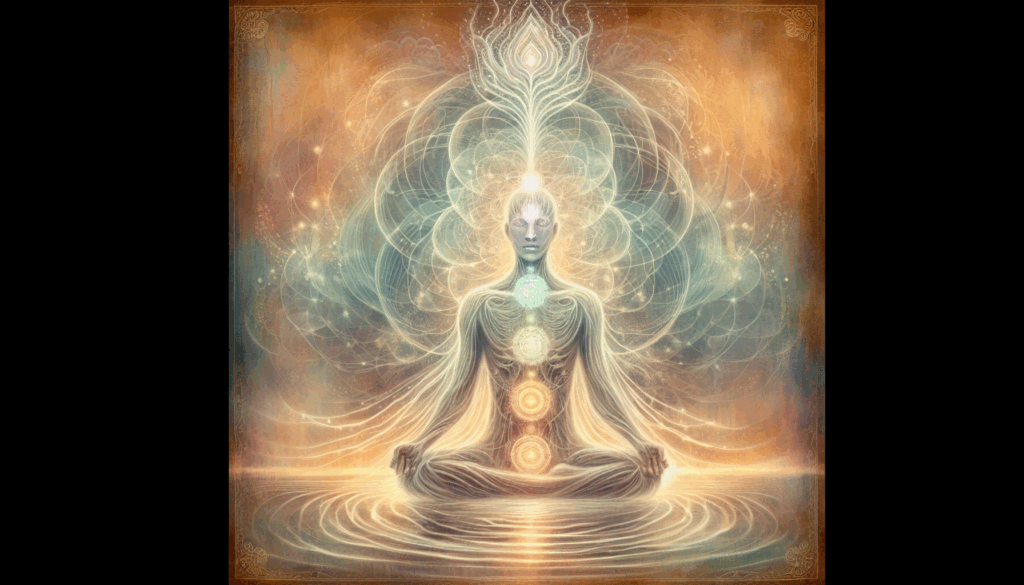
As their meditation deepens, the scriptures state their diet changed from leafy vegetables and roots, to water, to air, and finally to nothing at all. Taken literally, this seems impossible. However, Swamiji clarifies that this is an allegorical movement through the spiritual centers, or chakras. Good karmas are the vegetables, loving service the fruit, and profound meditation the root. As consciousness rises from the gross physical elements at the base of the spine to the subtle elements of water at the Swadhisthana chakra and air at the heart center, the practitioner’s reliance on the external world diminishes entirely. The story is a map of the mind letting go of gross attachments to sustain itself purely on spiritual realization.
Understanding True Darshan and the Illusion of Form
A ceaseless aspiration arises within the royal couple to see the Supreme Lord. Here, Swamiji notes a critical distinction: spiritual darshan is not a physical phenomenon. Mistaking a dream or a mental image for the Absolute is a common error. The ego feels threatened by the idea of being broken down, but the ultimate reality, the Akhanda (indivisible) and Ananta (endless) Self, remains unaffected.
Swamiji offers a beautiful analogy: the sun reflecting in countless pots of water. A child might believe they have captured the sun in a pot, or thrown the sun away when emptying the water. The sun itself, however, remains untouched. Similarly, while we might experience beautiful glimpses of the Divine through limited forms (Saguna Brahman), these are just reflections. If we conclude that a specific form is the entirety of God, we are, as Swamiji gently puts it, “fooled by darshan.” True darshan occurs when the river enters the ocean: the individual ceases to exist as a separate entity claiming to have seen God, and instead merges into the Absolute.

The Stages of Divine Grace
As devotion matures, the Divine responds in different stages. Drawing from the wisdom of the Bhagavad Gita, Swamiji outlines how God acts first as Upadrasta, the supervisor watching from a distance, much like a mother observing her child play, allowing them to build strength through minor challenges. As the devotee performs noble actions, God comes closer as Anumanta, offering encouragement and approval. Ultimately, God becomes Bharta, the complete supporter, taking responsibility for every detail of the devotee’s life.
Through this process, the Supreme actually comes under the loving control of the devotee (Sevak bas ahai). It is an exquisite paradox: the Absolute, which is beyond all limitations, assumes the role of a loving supporter purely for the sake of the devotee’s spiritual awakening.
The Illusion of Time and Refusing Lesser Boons
The scriptures claim Manu and Shatarupa practiced these austerities for six thousand, then seven thousand, and finally ten thousand years. Swamiji reminds us that time is not an absolute reality; it coexists with the conditioned mind. In states of profound meditation, the boundaries of time collapse. What might take general souls thousands of lifetimes to accomplish can be realized in a matter of hours by a perfectly concentrated mind.
During this period, the deities Brahma, Vishnu, and Shiva appear, offering worldly and heavenly boons. Yet, the royal couple refuses to even look at them. Why? Because these deities, in this context, represent Brahman operating through the veil of Maya (Sattvic Prakriti). They are tied to the world process of creation, preservation, and destruction. Manu and Shatarupa’s aspiration is fixed solely on the unconditioned Absolute. They demonstrate that a true seeker remains unmoved by spiritual distractions, no matter how glorious, keeping their heart firmly anchored in the ultimate truth.
Scholar’s Corner
- Tulsi Ramayana, Balakanda, Doha 148: The verse detailing the profound austerities and singular focus of Svayambhu Manu and Shatarupa.
- Bhagavad Gita Chapter 13: References to the Supreme acting as Upadrasta (onlooker), Anumanta (approver), and Bharta (supporter).
- Mantra: Om Namo Bhagavate Vasudevaya (The twelve-lettered formula used for establishing foundational devotion).
Glossary
- Saguna Brahman: The Absolute viewed with attributes or form; a foundational and inspiring stepping stone in early meditation practices.
- Nirguna Brahman: The Absolute without attributes; the formless, immutable, and eternal reality (Neti, Neti – not this, not this).
- Darshan: A glimpse or vision of the Divine; mystically, it is an internal awakening and merging rather than a physical sighting.
- Upadhi: A limiting adjunct or condition; the mechanism through which the limitless appears limited, just as a yellow lens makes a white flower appear yellow.
- Akhanda & Ananta: Indivisible and endless; describing the true nature of the timeless Self.
This study guide is drawn from the archived teachings of Sri Swami Jyotirmayananda.