

We often accept stress, fear, and anxiety as standard symptoms of modern life. However, ancient spiritual science reveals that these are merely surface-level disturbances caused by a much deeper psychological mechanism: craving. Sri Swami Jyotirmayananda, a direct disciple of Swami Sivananda, illuminates this reality by drawing upon the profound teachings of the Yoga Vasistha. By understanding the anatomy of our desires, we can begin to uproot the true cause of our mental unrest and awaken the divine peace that already exists within us.
According to Vedanta, ordinary thoughts and desires constantly come and go. In the deep unconscious, we hold samskaras—accumulated impressions from past actions. Out of these seeds sprout vasanas, subtle tendencies that come close to the conscious mind. When a simple thought is tainted by egoism (the feeling of “I don’t have this, but I need it”), it morphs into a desire.
Desire, in its early stages, is like a small fire that can easily be extinguished. However, when we dwell on that object of desire, repeating the thought wave again and again, it blazes into trishna—a deep, overpowering craving. Once a craving takes hold, it drives our actions, compelling us to pursue worldly pleasures while blinding us to the troubles accumulating in the background.
The Insatiable Wolf of the Mind
To illustrate the sheer destructive power of craving, Sri Swami Jyotirmayananda offers a striking visual metaphor. Craving is like an insatiable wolf living hidden within the cave of the human mind. To survive, this wolf consumes the vitality, mental strength, and prana (life force) of the individual.
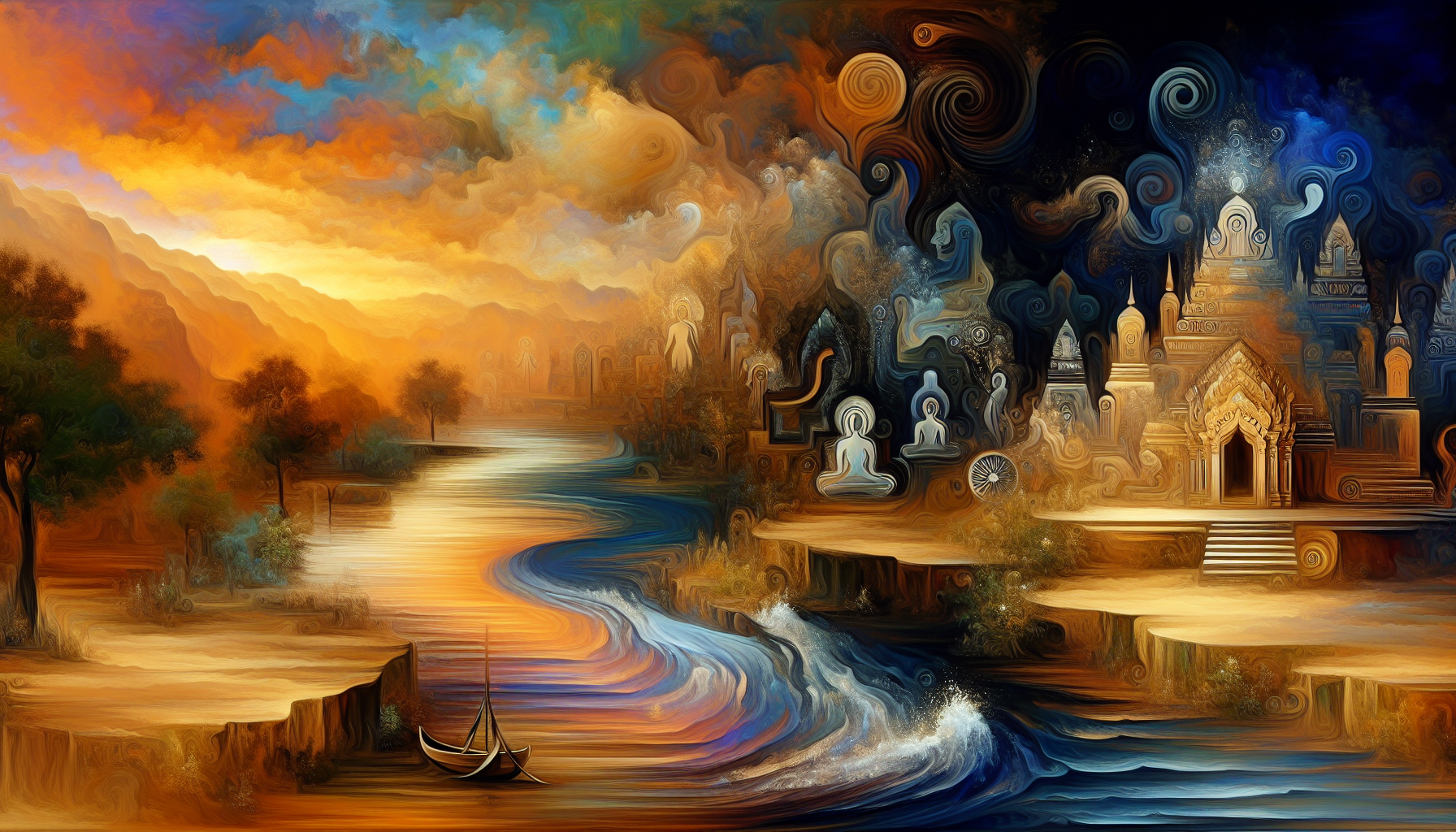
Craving is inherently deceptive. It presents itself as a shallow stream, creating the illusion that it is an insignificant, easily manageable temptation. But the moment you step into it, the water erupts into a massive flood of delusion, grief, and fear. Driven by craving, the mind loses its self-dependence, plunging the individual into a state of weakness and anxiety.
The Illusion of the World Process
From a philosophical perspective, the entire world process—the endless cycle of birth, death, and human suffering—is sustained by craving alone. As long as we are driven by the ego sense (ahamkara) and the illusion of multiplicity, we will remain caught in the ropes of karma. The ego-led mind fixates on the physical body, wealth, and perishable objects, completely ignoring the reality of the Supreme Self.
Great sages, who can endure the massive fires of universal destruction, find the slightest trace of craving to be entirely intolerable. They recognize that all sorrow and terror in the world proceed from this single source.
The Path to True Normalcy
We often view our anxious, desire-driven lives as “normal.” But to the spiritual vision, you are never truly normal until you attain nirvana (liberation). True normalcy equates to a mind completely void of impurities, where the flame of craving has been extinguished forever.
How do we reach this state? The scriptures guide us toward jneyavasana tyaga—the renunciation of vasanas through deep understanding. By continually listening to spiritual truths, reflecting, and meditating, we progressively develop detachment from the illusory world of time and space. As we realize that the physical body and the ego are not our true identity, the poisonous creeper of craving is destroyed, allowing the radiant truth of the soul (Brahman) to shine forth.
Scholar’s Corner
For those eager to delve deeper into these profound teachings, here are the primary textual sources and topics covered:
- Primary Text: Yoga Vasistha
- Section: Upasham Prakarana
- Topics Covered:
- Section 14: Craving: The Source of All Evils
- Section 16: Renunciation of Vasana
Glossary of Sanskrit Terms
To aid your understanding, here’s a brief glossary of the Sanskrit terms used:
- Samskara
- Deep unconscious impressions or seeds of past actions.
- Vasana
- Subtle desires, tendencies, or inclinations.
- Trishna
- Intense craving; an overpowering desire.
- Prana
- The vital life force or energy within the body.
- Jiva
- The individual, embodied soul.
- Ahamkara
- Egoism; the illusory sense of “I” dependent on the body and mind.
- Nirvana
- Liberation; the state of absolute contentment void of craving.
- Brahman
- The Supreme Self; the ultimate, unchanging reality.
Further Exploration
Watch the full lecture here: https://youtu.be/W6zS6JXqh5Y
Join our spiritual community: https://bit.ly/4dgDWKn
This study guide is drawn from the archived teachings of Sri Swami Jyotirmayananda.