
**Introduction**
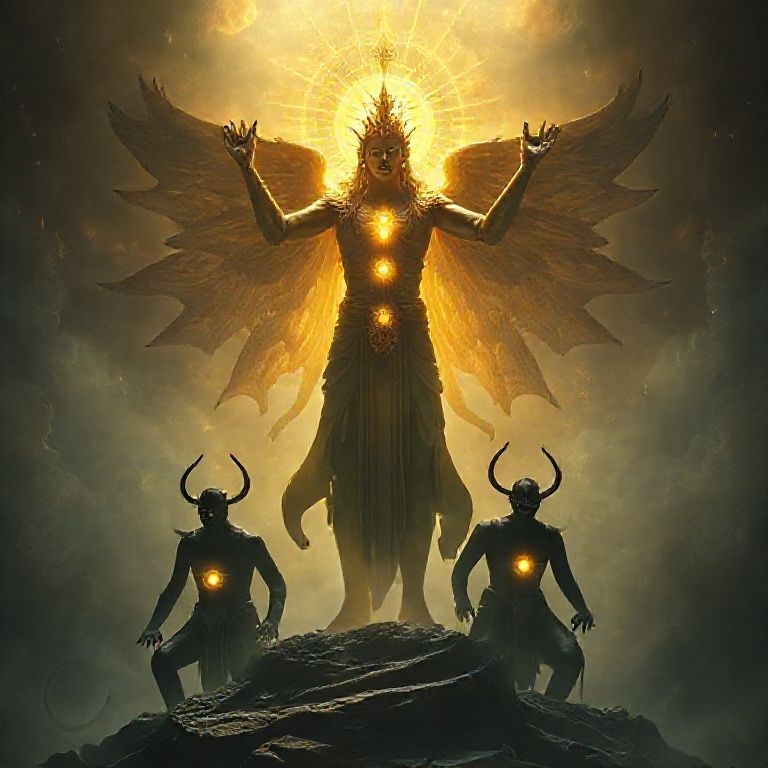
In the vast landscape of the *Yoga Vasistha*, stories serve as profound mirrors for the human psyche. In this teaching, we encounter the demon King Sambara, who represents the force of illusion (Maya). To defeat the Gods (our higher aspirations), he creates three generals: Dhama, Vyala, and Kata. These are not external monsters, but internal blockages that restrict our intellect, pollute our feelings, and cut down our self-effort. But the story does not end in defeat. It reveals the path to spiritual heroism.
**The War Within: Ego vs. Spirit**
The initial trio of demons represents the Tamesic (dull/negative) movement of the mind.
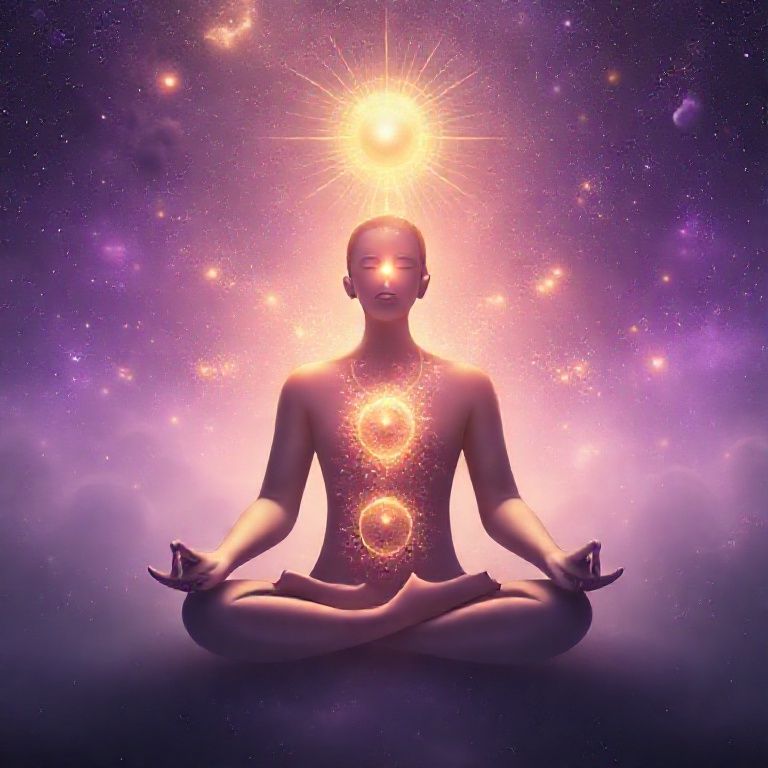
* **Dhama** attacks the Ajna Chakra, preventing the intellect (*Buddhi*) from blossoming.
* **Vyala** (the snake) constricts the heart (*Anahata Chakra*), replacing pure feeling with attachment.
* **Kata** strikes at the Manipura Chakra, severing our will to perform self-effort (*Kriya Shakti*).
However, when we cultivate awareness, we generate the counter-forces, the Sattvic generals:
* **Bhima (Terrible Strength):** The immense power of self-effort that crushes obstacles.
* **Bhasa (Shine):** The expansion of the heart where devotion and love radiate universally.
* **Drdha (Firmness):** The unshakable intuitive vision (“I am That”) that remains steady regardless of external circumstances.
**Breaking the Chain of Pain**
Why do we suffer? Swamiji outlines the “Chain of Pain,” a seven-step sequence that binds the soul:
1. **Avidya (Ignorance):** Forgetting our true nature.
2. **Aviveka (Non-discrimination):** Inability to distinguish truth from falsehood.
3. **Ahamkara (Ego-sense):** Identification with the limited self.
4. **Raga-Dvesa (Likes/Dislikes):** The oscillation of the mind.
5. **Karma (Action):** Driven by desire and aversion.
6. **Janma (Birth):** Embodiment to exhaust karma.
7. **Duhkha (Pain):** The inevitable suffering of limited existence.
To break this chain, we must strike at the link of *Ahamkara*. When the ego is transcended through the wisdom of *Drdha* and the devotion of *Bhasa*, the chain shatters, and the soul is free.
**Renunciation: A Mental Act**
True renunciation is not running away to a forest. As Swamiji explains, “Turning the mind from objects is a change in your attitude.” It is seeing the Divine presence behind the form. It is loving the Creator behind the creature. When you attain this vision, the “wealth of the three worlds becomes mere straw” compared to the bliss of the Self.
—
**Scholar’s Corner**
*Scriptural References from this Session:*
* **Yoga Vasistha, Sthiti Prakaraṇa, Section 34:** The Allegory of Dhama, Vyala, and Kata.
* **Yoga Vasistha, Sthiti Prakaraṇa, Section 35:** Methods of attaining mental peace.
* **Mantra:** *Om Pūrṇamadaḥ Pūrṇamidaṁ…* (Invocation of Infinite Fullness).
**Glossary of Terms**
* **Dhama:** Self-control (in this context, negative restriction of intellect).
* **Vyala:** Snake; allegorically, impure feeling or attachment.
* **Kata:** To cut; the force that severs self-effort.
* **Ahamkara:** The ego-sense; the false identification with the body and mind.
* **Vasana:** Subtle desires remaining in the subconscious mind.
* **Kriya Shakti:** The power of action and self-effort.
* **Sthita Prajna:** One established in steady wisdom.
—
**Watch the full lecture here:** [Link](https://youtu.be/05MCjrJrRI8)
**Join the Community:** [Link](https://bit.ly/4dgDWKn)
This study guide is drawn from the archived teachings of Sri Swami Jyotirmayananda.