
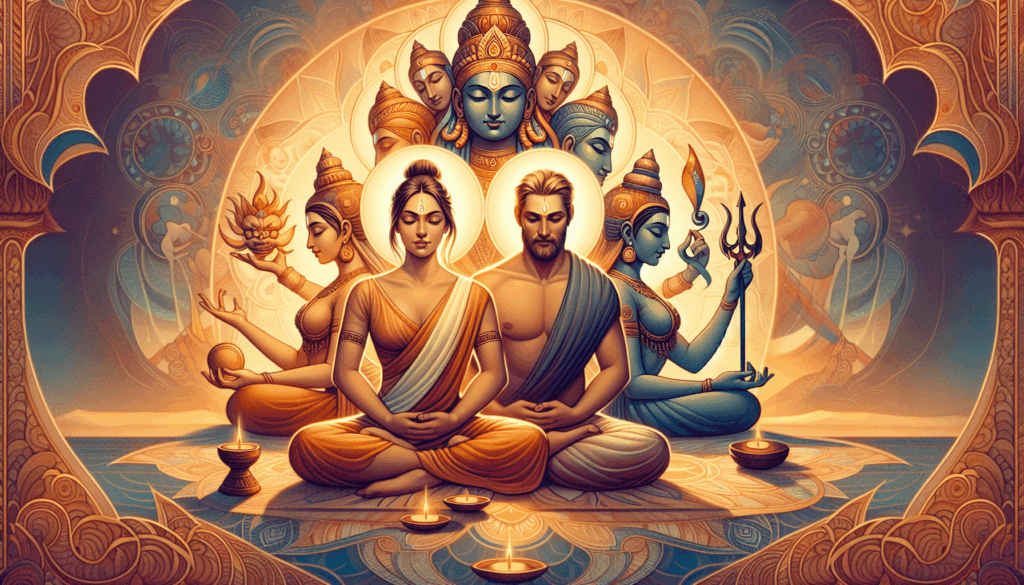
The study of scripture is not merely an intellectual exercise; it is an awakening of the divine potential (vidyanidhi) that resides within every soul. When we approach the sacred texts, we are met with profound allegories designed to heal the mind and reveal our innate perfection.
From a lecture by Sri Swami Jyotirmayananda, a direct disciple of Swami Sivananda, we find a masterful exposition on the nature of spiritual evolution through the lens of the Ramcharitmanas. Focusing on the Balakanda, Swamiji illuminates the story of Manu and Shatrupa, transforming it from a historical myth into a living roadmap for the soul’s liberation (Moksha).
In the spiritual context, these names are highly symbolic. “Manu,” sharing the root of the English word “man” and the Sanskrit Manushya, represents the mind and human intelligence. “Shatrupa” represents bhavana, the profound feeling and multifaceted potentialities that accompany mental movement.
Their rigorous austerity (Tapas), described as thousands of years living on water and air, is an allegory for the sustained, disciplined effort required across many lifetimes. Swamiji emphasizes that spiritual attainment is not a hasty technological process where one simply “presses a button.” If you possess a genuine interest in spirituality today, the “Manu” within you has already practiced immense austerity across countless previous embodiments.
The Rejection of Worldly Boons
During their deep meditation, Manu and Shatrupa were approached by Brahma, Vishnu, and Shiva, who offered them every conceivable worldly and celestial blessing. Brahma offered absolute wealth (Vitteshana), flourishing progeny (Putreshana), and boundless fame (Lokeshana). Vishnu offered divine virtues, and Shiva offered absolute dispassion (Vairagya).
Yet, the royal couple ignored these temptations. This illustrates a critical threshold in spiritual maturity: true liberation is not found in the acquisition of temporal power or celestial comforts. All relative benefits, even those bestowed by the gods of creation and sustenance, are ultimately transient. Until the mind recognizes the Supreme Reality, the cycle of limitation continues.
From Saguna to Nirguna Brahman
Swamiji provides a vital teaching on the evolution of worship. We often begin by adoring Saguna Brahman — God with form and attributes. We conceptualize the Divine as a loving parent, a majestic figure possessing the greatest virtues, such as Satchitananda (Existence-Knowledge-Bliss). This stage is perfectly in order; it makes the infinite accessible to our limited minds.
However, just as a student must graduate from one grade to the next, a seeker must not remain confined to the Saguna level permanently. The ultimate reality, Nirguna Brahman, is formless and without attributes.
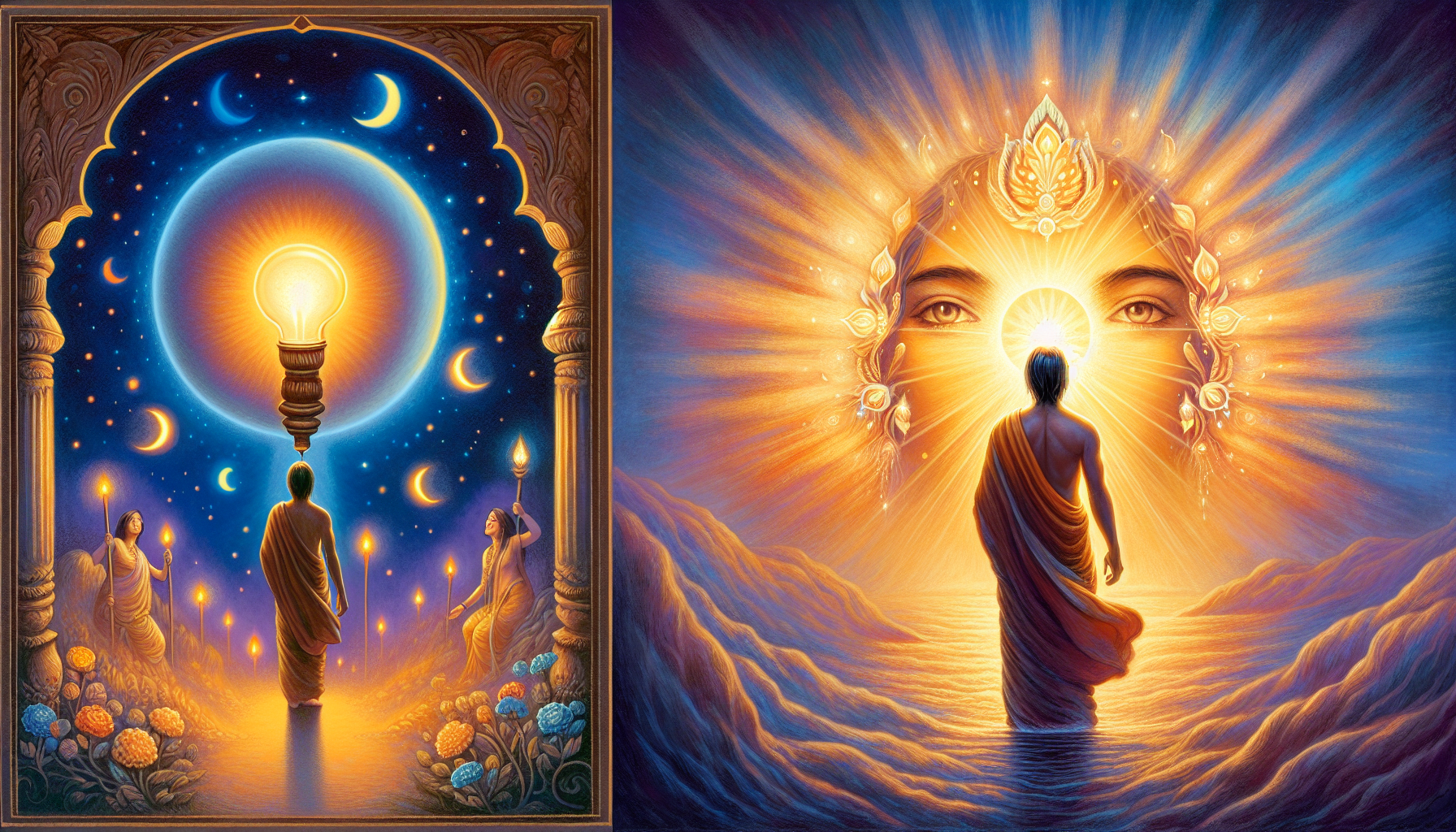
Swamiji uses the powerful analogy of a person born blind whose sight is restored during the night. The person may mistake a streetlamp or the moon for the sun. But when the actual sun rises, there is no longer any room for doubt; the reality is self-evident. Similarly, when the true Self manifests, the mind is swept away by undeniable Reality. The form is transcended by the Absolute.
The True Meaning of Shastang Pranam
When success in practice finally arrives — symbolized by the divine voice (Akashvani) entering their hearts — Manu and Shatrupa are instantly healed of all their emaciation. They fall in Shastang Pranam, prostrating like a stick (Dandavat).
This gesture is an act of total surrender, symbolizing the shedding of eight specific internal limitations:
- Contempt
- Cowardly shyness
- Fear
- Doubting mind
- Finding faults in others
- Pride of lineage
- Pride of manners
- Pride of caste
To truly bow to the Divine means to drop these heavy burdens of the ego, realizing that true support comes solely from the Supreme.
In this realization of total helplessness (Anath) before the world, we recognize that the entire universe is merely a reflection. Only the Supreme Sun, the Absolute Brahman, stands as our true and eternal support.
Scholar’s Corner
- Source Text: Ramcharitmanas by Goswami Tulsidas.
- Section: Balakanda, Doha 145.
- Key Concept: The transition of the soul’s focus from Saguna Sakar (God with form) to Nirguna Nirakar (God without form).
Glossary of Sanskrit Terms
- Tapas: Austerity; disciplined spiritual practice aimed at purification.
- Saguna Brahman: The Absolute conceived with qualities, forms, and attributes.
- Nirguna Brahman: The Supreme Reality without form, qualities, or limitations.
- Shastang Pranam: A prostration involving eight parts of the body, symbolizing total egoic surrender.
- Vatsalya: The pure, selfless love resembling a mother’s compassion for her child (or a cow for her calf).
Join the Community: Connect with fellow seekers
This study guide is drawn from the archived teachings of Sri Swami Jyotirmayananda.
This is really interesting, You’re a very skilled blogger. I’ve joined your feed and look forward to seeking more of your magnificent post. Also, I’ve shared your site in my social networks!