
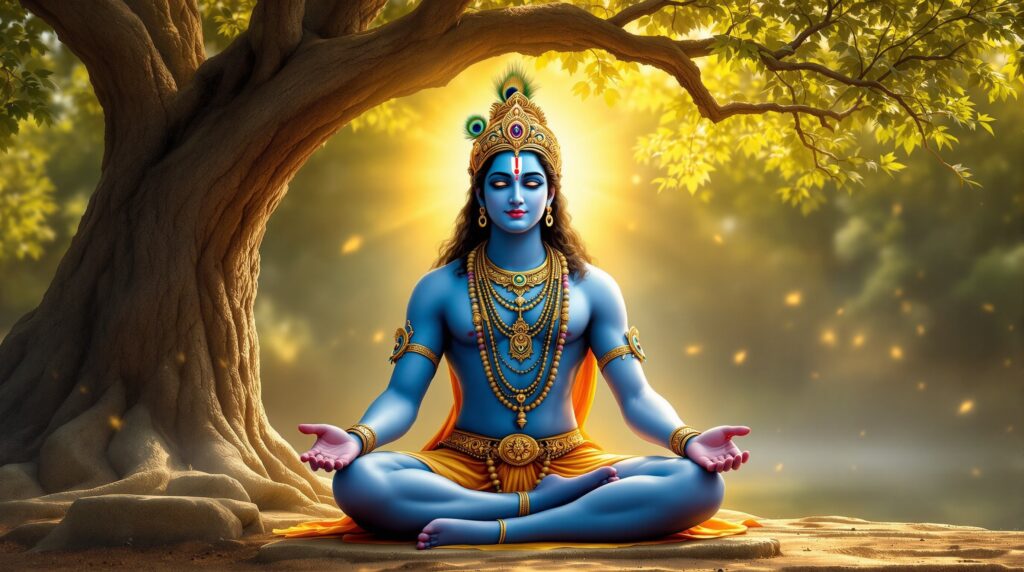
The relentless pursuit of security in the material world inevitably leads to stress and dependency. We attempt to cage and preserve the objects and relationships that bring us joy, only to find that the very act of holding on breeds anxiety. Sri Swami Jyotirmayananda, the last direct disciple of Swami Sivananda, offers a profound alternative through the teachings of the Narada Bhakti Sutras: replacing worldly attachment with divine attachment.
The Illusion of Worldly Security
The mind is naturally inclined to form attachments based on where it perceives happiness. In the realm of material objects (known as Vishaya Sakti), this creates a trap. A source of temporary joy quickly becomes a source of burden as we expend mental energy trying to secure it against the inevitable flow of time.
By the time we have safeguarded the object, the original happiness has often faded, replaced by the heavy responsibility of maintenance and the persistent fear of loss. This cycle highlights the transient nature of worldly security.

Transcending Time Through Parabhakti
Sutra 81 reminds us that across the threefold realities of past, present, and future, devotion to the Absolute is the only pursuit of lasting value. The yoga of devotion is not a historical artifact; it is an instinctive movement of the human heart. The spiritual requirements for enlightenment remain unchanged by the advancements of modern science and technology. By turning the mind toward the permanent reality, one transcends the anxieties of time and finds enduring peace.
The 11 Forms of Divine Attachment
In Sutra 82, the text outlines eleven distinct expressions of supreme devotion (Parabhakti). These are not rigid steps, but rather organic developments of an expanding heart, each leading to a deeper connection with the divine.
- Glorification of Divine Qualities: Training the mind to recognize and reflect upon the vastness, compassion, and beauty inherent in creation.
- Attachment to Divine Form: Beholding the presence of the Absolute behind all names and forms, shifting perception from superficial aesthetics to intrinsic divinity.
- Attachment to Worship: Cultivating a dedicated, joyful practice of prayer and meditation that deeply nourishes the unconscious mind.
- Constant Remembrance: Utilizing quiet moments to recall scriptural truths or repeat a mantra, cutting new, positive grooves in the mind.
- The Attitude of a Servant: Willingly recognizing oneself as an instrument, thereby relinquishing the crushing burden of personal worry to a higher intelligence.
- The Attitude of a Friend: Developing a closeness that allows for authentic, unburdened communion, free from the formalities of fear.
- The Attitude of a Parent or Child: Approaching the Absolute with the uncomplexed, profound simplicity of a child, whether as a protective parent or a trusting offspring.
- The Sweet Sentiment: Experiencing the profound, pure love characterized by the complete turning of the soul toward its source.
- Absolute Surrender: Achieving an integrated personality where there is no longer a sense of separation or independent will, but a complete merging with the divine will.
- Complete Engrossment: A state of being so absorbed in the object of devotion that the awareness of the separate self dissolves entirely.
- The Pain of Separation (Viraha): A highly positive spiritual hunger; a deep unrest felt when the mind temporarily loses its focus on the divine, prompting an immediate and ardent return to awareness.
Scholar’s Corner
The exposition draws upon the foundational principles found in revered texts such as the Ramcharitmanas and the Vishnu Sahasranam. These scriptures illustrate how the practice of seeing the divine in all aspects of creation has been consistently documented by great sages like Narada and Yagyavalkya throughout history, reinforcing the timeless relevance of these teachings.
Glossary
- Parabhakti
- Supreme devotion; the highest state of spiritual love.
- Vishaya Sakti
- Attachment to the objects of the world.
- Japa
- The repetition of a mantra or divine name.
- Bhavana
- Feeling, attitude, or sustained spiritual sentiment.
- Viraha
- The pain of separation; a spiritual longing for reunion with the divine.
Watch the full lecture here: https://youtu.be/jIj5hJq_zXQ
Join the Community: https://bit.ly/4dgDWKn
This study guide is drawn from the archived teachings of Sri Swami Jyotirmayananda.