
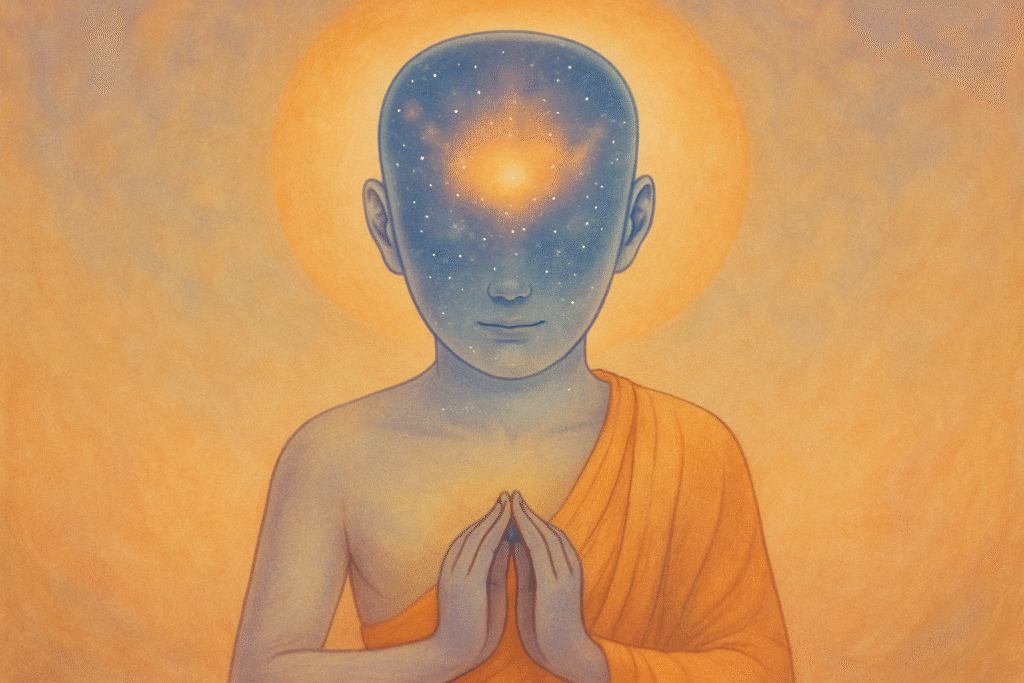
Sri Swami Jyotirmayananda, a direct disciple of Swami Sivananda, opens this Yoga Vasishta class with a direct assurance from Sage Vasishta to Rama: the Self is vast like the sky and pure like smokeless fire. This profound teaching is not only for Rama as a person; it is for every seeker who has ever asked, “Who am I?”
This Study Guide follows the central movement of the lecture: from the little sense of “I” to the recognition of Brahman as the ultimate Reality behind mind, world, and all relations.
The mind does not need to be crushed. It needs to become transparent to the Self.
The Dream World as a Doorway to Deeper Understanding
Swamiji begins with a simple, yet powerful, image: the dream world. In a dream, a whole world appears – friends, enemies, places, movement, and even fear may all arise. Yet, throughout this entire experience, there is no corner where consciousness is absent.
The point is not to dismiss the waking world harshly, but rather to use this insight to loosen the mind’s grip on separateness. If the dream world can appear entirely within consciousness, then the waking world can also be examined with deeper care and understanding, revealing its true nature as an appearance in consciousness.
Who Am I? Unveiling the True Self
The class then turns toward the fundamental question that stands at the heart of Vedanta: “Who am I?” The body points to itself, but it is merely an instrument, constantly changing. Memory offers a sense of identity through family, history, status, and role, but these are all fleeting formations, not our true essence.
Swamiji skillfully guides the listener inward, layer by layer. Behind the physical brain is the individual mind. Behind the individual mind is the cosmic mind, the universal intelligence. And behind the cosmic mind is Brahman, the pure Absolute Self. This ultimate Reality cannot be held inside thought; the mind must become quiet, clear, and fit for Self-knowledge.
Mind as Both Bondage and Liberation
Swamiji cites the ancient teaching that the mind itself is the cause of both bondage and liberation. The very same mind that clings to passing forms and illusions can, through proper practice, become a clear mirror for the Self.
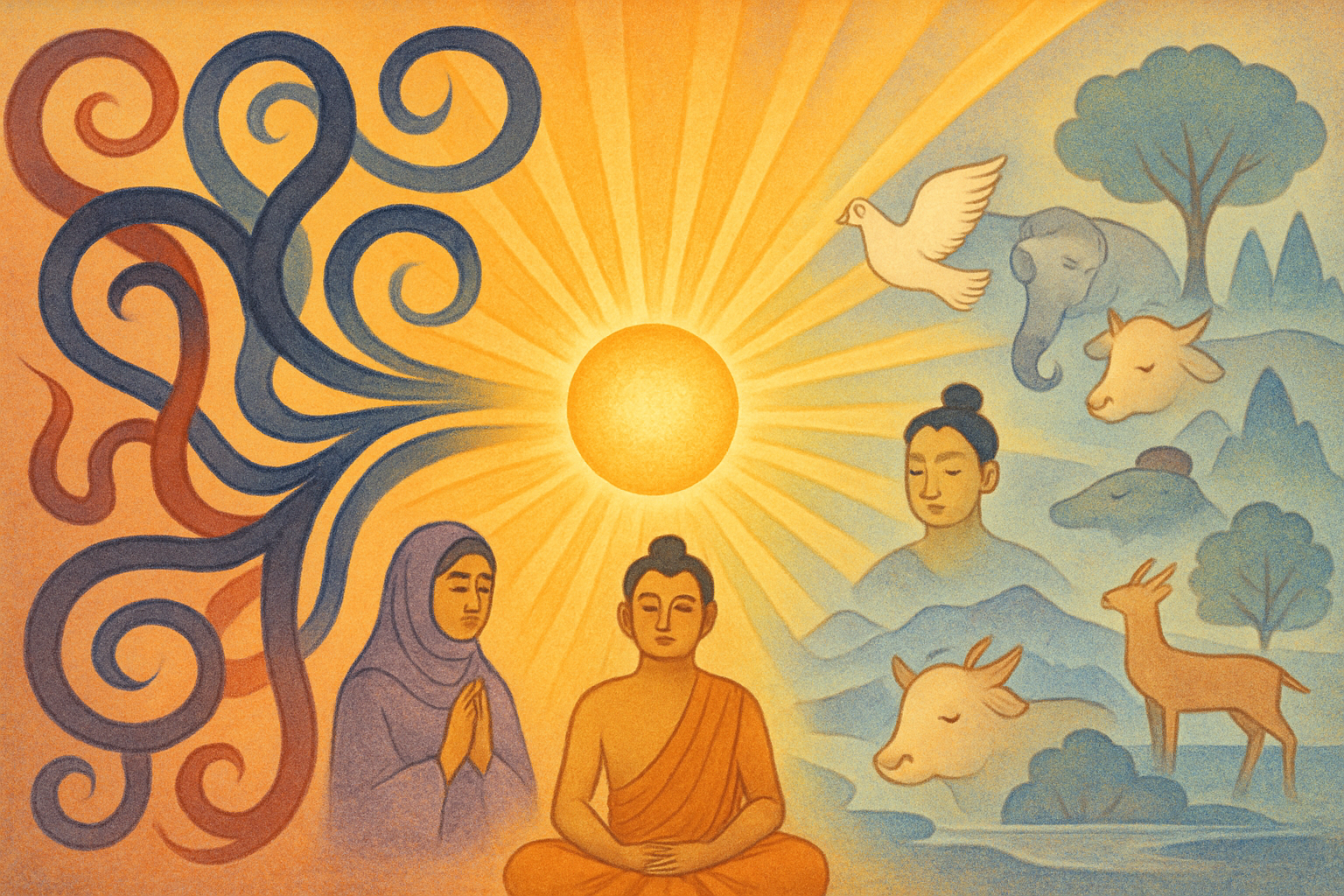
When subtle desires, or vasanas, disturb that mirror, the mind shakes. It moves restlessly between attraction, fear, memory, and projection, creating a sense of fragmentation. Spiritual practice is designed to steady the mind, allowing it to reflect the Truth without distortion, thus paving the way for liberation.
Raga, Dwesha, and the Transformation of Relation
The lecture gives special attention to human relationships and the powerful forces of Raga (attachment) and Dwesha (aversion). These crowd the mind with impressions, binding the heart to limited likes and dislikes, creating a narrow world of “mine” and “not mine.”
Crucially, Swamiji does not ask the seeker to become cold or detached in an unfeeling way. Instead, he points to a profound transformation. Raga can evolve into Bhakti, an expansive, universal love. Similarly, Dwesha can be transmuted into Jnana, the clear wisdom of neti neti (not this, not this), which discerns the Real from the unreal. Limited personal relations then expand into wider sympathy, then universal kinship, ultimately culminating in the vision that all beings are the Self.
The Whole World as Friend: Embracing Vishwabandhu
Swamiji explains Vishwabandhu as the profound feeling that the whole world is one’s family. This understanding begins at a practical level: do not confine goodwill to one group, one nation, or one limited circle. Let the mind grow large enough to genuinely wish good for all beings, everywhere.
The lecture closes with the timeless prayer, “Sarve bhavantu sukhinah” – may all be happy. In this context, the prayer is far more than a polite ending; it is the natural, spontaneous expression of a heart that has awakened to the vision of the one Self in all.
The prayer for all beings is the natural voice of a widened heart.
Scholar’s Corner
- Source text: Yoga Vasishta, Upashama Prakarana, Section 18.
- Core inquiry: Who am I?
- Vedantic frame: Brahman as the Reality behind body, mind, cosmic mind, and world.
- Practice frame: Purification of mind, steadiness, affirmation, satsanga, Bhakti, Jnana, and the widening of goodwill.
- Closing prayer: Sarve bhavantu sukhinah, the Upanishadic prayer for the well-being of all.
Sanskrit Glossary
- Atman
- The Self, not the body or personality.
- Brahman
- Absolute Reality, the pure Self behind all.
- Upashama Prakarana
- The section of Yoga Vasishta concerned with quietude and the calming of mental movement.
- Vasanas
- Subtle impressions and desires that disturb the mind.
- Vikshepa
- Distraction or scattering of the mind.
- Raga
- Attachment or attraction.
- Dwesha
- Aversion or hatred.
- Bhakti
- Devotion, love directed toward the Divine.
- Jnana
- Wisdom or spiritual knowledge.
- Kleshas
- Afflictions such as ignorance, egoism, attachment, hatred, and fear of death.
- Vishwabandhu
- One who regards the whole world as kin.
- Sarve bhavantu sukhinah
- May all be happy.
Watch the full lecture here: https://youtu.be/8RJPlhUijI0
Join the Community: https://bit.l y/4dgDWKn
This study guide is drawn from the archived teachings of Sri Swami Jyotirmayananda.