

Sri Swami Jyotirmayananda teaches from the profound *Yoga Vasistha* story of Punya and Pavana, where the experience of grief becomes a pivotal starting point for a deeper vision of life. In this narrative, their parents have departed. Punya, established in wisdom, remains unshaken, while Pavana, still touched by sorrow, seeks guidance.
This *Study Guide* follows the heart of Swamiji’s lecture, exploring how *Vedanta* can meet grief not with coldness, but with profound understanding. It illuminates how our love for departed ones can be transformed into prayer, *Self-inquiry*, and a powerful *Godward movement*.
Punya and Pavana: Two Stages of Inner Life
In this profound section of the *Yoga Vasistha*, we are introduced to the story of Punya and Pavana, two brothers facing the departure of their parents. *Punya* represents spiritual maturity; his name points to virtue that has ripened into wisdom. He remains unshaken by loss.
*Pavana*, on the other hand, represents purification that has begun but is not yet complete. While he has turned away from worldly follies, grief still agitates his mind, highlighting a common stage in the spiritual journey.
Their dialogue beautifully illustrates two distinct stages in the inner life. A sincere seeker may possess faith, devotion, and good intentions, yet still require deeper understanding and guidance when confronted with the profound experience of loss.
Grief and the Departed Soul
Swamiji makes a tender yet firm point regarding grief: it **does not help the departed soul**. From a Vedantic perspective, those who have passed are under the divine guidance of God and the immutable law of *karma*. The essential lesson for the living is to learn how to meet sorrow without adding further burden to one’s own mind.
This teaching is not an encouragement for indifference. Rather, it is an invitation to honor our love in a wiser, more spiritually uplifting form.
A Higher Offering: Transforming Love into Prayer
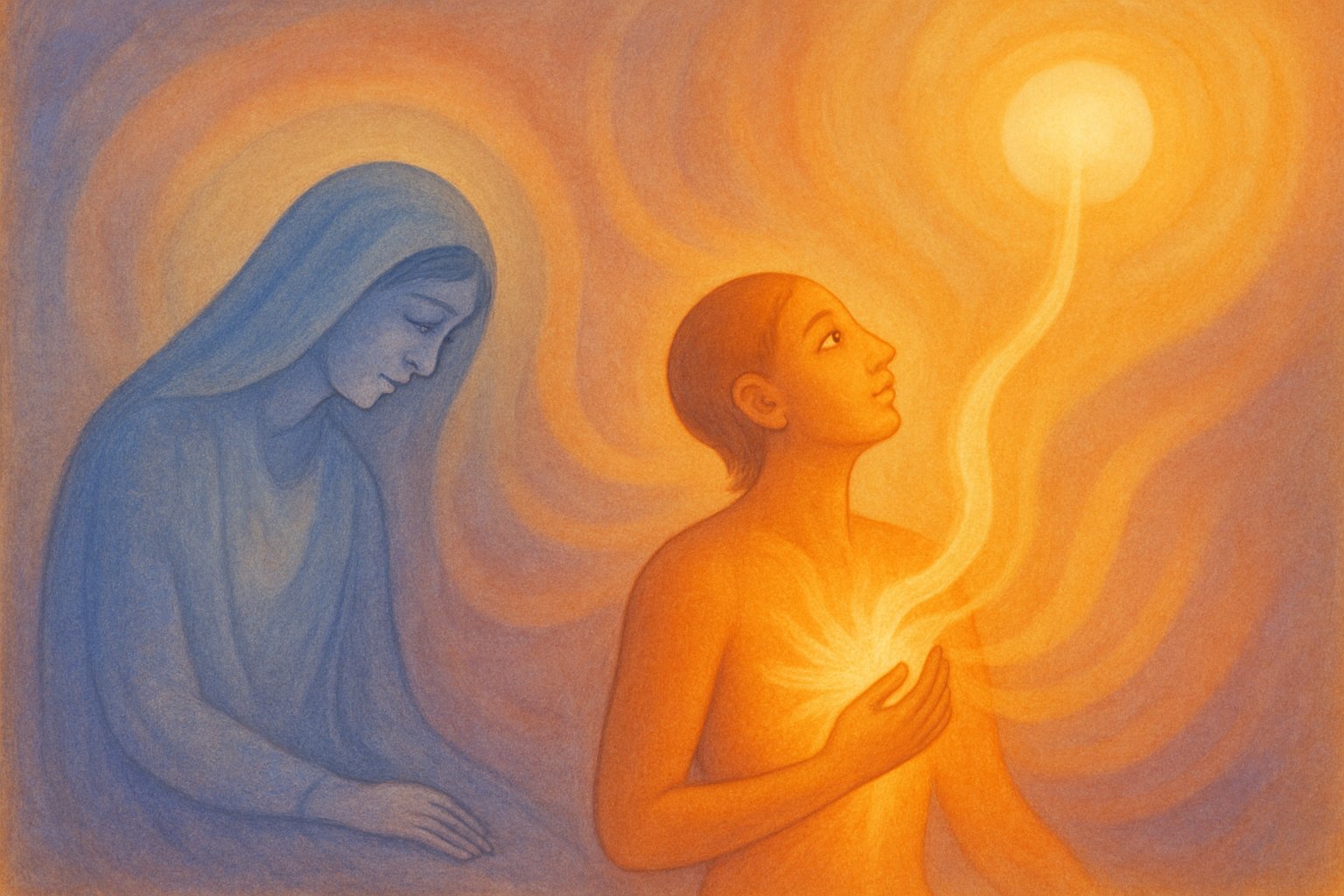
The lecture offers a truly beautiful and transformative alternative to sorrow. If one wishes to remain genuinely attuned with parents or any departed loved ones, the path lies in **turning the heart toward Godward love**. Let remembrance evolve into sincere prayer.
Allow your love to become an energy that uplifts not just your own spirit, but the entire lineage of life. Swamiji powerfully connects this concept with devotional teachings, noting that when genuine love of God awakens, the ancestors themselves rejoice.
All Are the Self: Widening Our View of Relationship
The *Yoga Vasistha* further widens our perspective. Across countless births, the soul has experienced myriad relationships — countless fathers, mothers, friends, and relatives. The profound purpose of this teaching is not to deny natural affection but to **free affection from narrowness and attachment to specific forms**.
If the *Self* is *Brahman*, the Absolute Reality, then this same truth applies to all beings. Love, when understood through this lens, becomes broader, steadier, and less dependent on fleeting memories and physical forms.
Vedanta Is Not Coldness: The Warmth of True Detachment
Swamiji wisely warns against a dry or intellectual misunderstanding of *Vedanta*. The teaching is emphatically not, “Nobody is my friend.” Instead, the teaching is to cultivate a heart that is **more friendly, more loving**, and less ensnared by the illusion of possession.
True spiritual detachment does not freeze the heart; on the contrary, it liberates the heart to love more deeply and wisely, illuminated by spiritual knowledge (*Jnana*).
Scholar’s Corner
- Source text: *Yoga Vasistha*, *Upashama Prakarana*, Sections 19-20.
- Story: Punya and Pavana, sons of Dirgha Tapa.
- Core issue: Grief over departed parents and the spiritual meaning of relationship.
- Practice frame: Godward love, Self-inquiry, remembrance, and wisdom.
- Vedantic frame: Relationships arise and pass across embodiments, while the birthless Self remains unchanged.
Sanskrit Glossary
- Yoga Vasistha: A major Vedantic scripture framed as a dialogue between Sage Vasistha and Rama.
- Upashama Prakarana: The section concerned with quietude and calming the movements of the mind.
- Punya: Virtue or merit; here also the name of the wiser brother.
- Pavana: Purifying; here the brother still touched by grief.
- Tilanjali: An offering made for departed loved ones (often water and sesame seeds).
- Brahman: Absolute Reality, the birthless Self.
- Aham Brahmasmi: “I am Brahman” – a Mahavakya, or Great Utterance, affirming the identity of the individual Self with the Absolute.
- Bhakti: Devotion, love directed toward the Divine.
- Jnana: Wisdom or spiritual knowledge.
Continue Your Journey: Watch the Full Lecture!
Dive deeper into this profound teaching by watching the complete lecture:
Watch the full lecture here on YouTube
Join Our Community
Connect with fellow seekers and continue your spiritual exploration:
This study guide is drawn from the archived teachings of Sri Swami Jyotirmayananda.