

In the modern era, the human mind is often caught in a terrible dream of stress, doubt, and fear. We find ourselves constantly agitated by the shifting circumstances of our lives, believing that happiness lies just over the horizon—if only we could secure the right job, the perfect house, or enough recognition.
This fundamental misunderstanding creates a contracted mind, abundant with anxiety and unrest. However, the ancient wisdom of Vedanta offers a powerful cure for this condition. As beautifully explained by Sri Swami Jyotirmayananda, a direct disciple of Swami Sivananda, true peace is not found by manipulating the external world, but by transforming our internal state.
The Parable of the Velvety Shoes
When the mind is consumed by the desire to control external situations, it becomes deeply frustrated. To illustrate this profound truth, there’s a timeless parable about a prince who, in his ambition to enhance the glory of his kingdom, decided to make everyone walk comfortably by covering all the streets of his capital city with velvet.
The task, as you might imagine, was impossible, and he became extremely discouraged. His wise preceptor finally offered a simple, yet profound, solution: “Instead of trying to cover the entire earth, simply put velvety shoes on your own feet. Then, wherever you step, the ground will feel soft.”
This story is a powerful metaphor for human understanding. We cannot remove all the difficulties, harshness, and problems of the world. Attempting to do so will only lead to exhaustion and despair. However, if our understanding is freed from its sickness and abnormality, we essentially put on the “velvety shoes” of spiritual vision.
By cultivating a positive, devoted mind backed by the awareness of a higher reality, the world of misery ceases to hold power over us. We may still face challenges that shake us, but just as a tree grows stronger when the wind shakes its branches, these challenges will only strengthen our resolve and deepen our inner peace.
The Contraction and Expansion of the Mind
When the mind is led into contraction by increasing desires and attachments, it becomes like a drying river in the winter. As the water level recedes, the hidden mud, snakes, and crocodiles are revealed. Similarly, a contracted mind reveals its latent impurities: anger, greed, pride, and hypocrisy. A mind functioning in this state is unable to rest, constantly plagued by “ifs” and “buts” that destroy any fleeting sense of happiness.
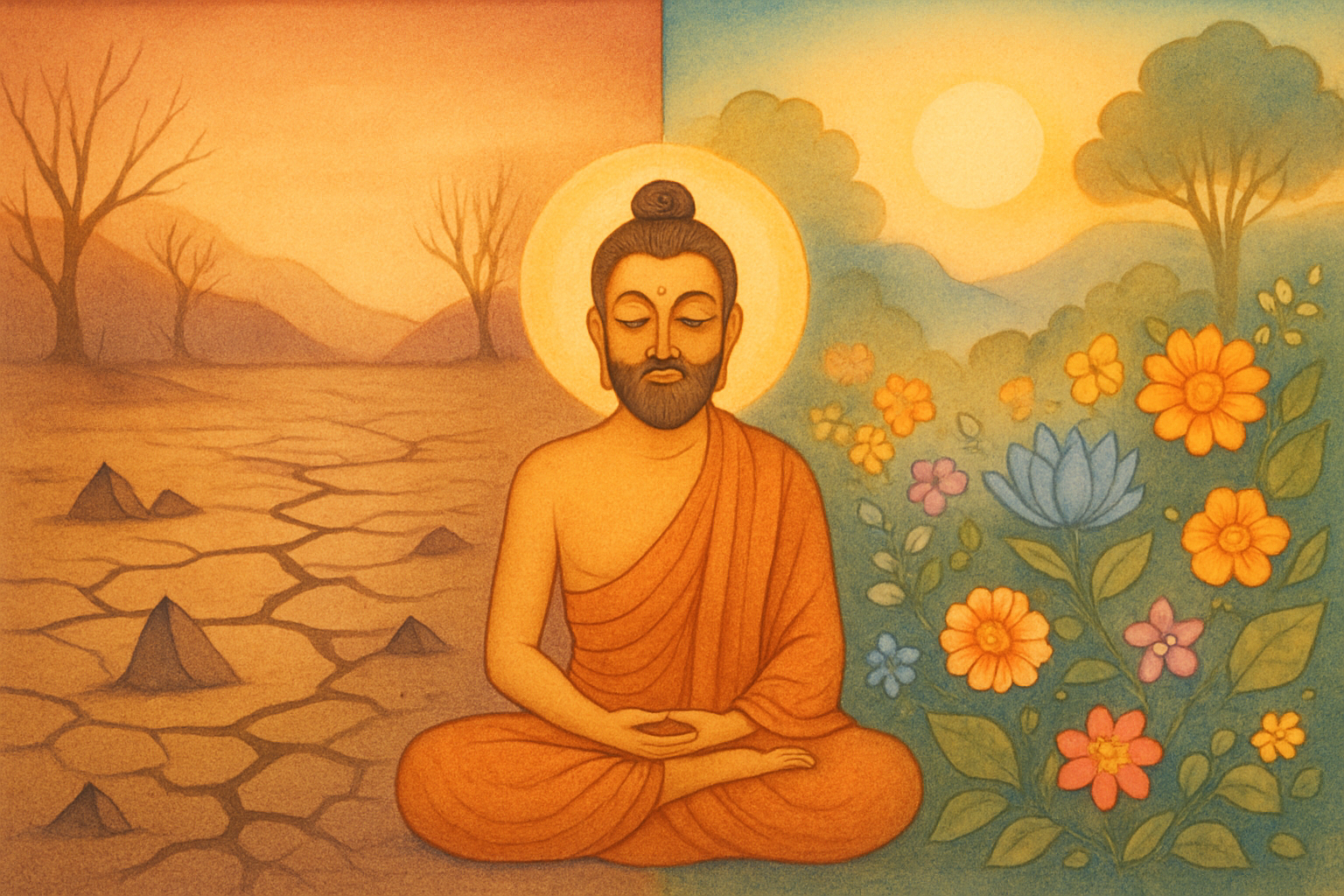
Conversely, when we step away from cravings, the mind begins to expand. This transformation turns the mind into a blossoming garden, vibrant with life and beauty. Instead of negativity, we cultivate the eight divine flowers of worship. These include non-violence (which is truly a profound love for all beings), control of the senses, compassion, serenity, and the pursuit of truth.
Offering these virtues through our daily actions is a powerful spiritual movement that brings internal fullness and lasting contentment.
The Dispassion of King Bali
The profound process of spiritual awakening is vividly captured in the historical narrative of King Bali. After conquering the three worlds and ruling for countless years, King Bali found himself seated on the uppermost balcony of his palace. Looking out over his vast empire, he began to reflect on the endless flux of generations and the repetitive, ultimately unsatisfying, nature of sensory pleasure.
He recognized that indulging in these pleasures only brought a fleeting sense of satisfaction when the mind was overpowered by ignorance. This act of sitting on the upper balcony represents the crucial art of reflection.
It is an invitation to elevate our consciousness above the immediate pull of troubled emotions and sensory demands. By developing this detached view, we can assess our lives with greater clarity and realize the supreme value of spiritual liberation over temporary material gains. The continuous thirst for progeny, wealth, and fame only binds the soul. Recognizing the divine presence behind all aspects of life is the key to dissolving these bonds and finding true freedom.
The path to a serene heart requires patience, diligent reflection, and steady practice. Through the guidance of authentic lineage and deep philosophical study, anyone can learn to replace the heavy burdens of worldly craving with the light of spiritual freedom.
Glossary of Terms
- Mala
- Gross impurities of the mind, such as anger and greed.
- Vikshepa
- Subtle impurities and mental restlessness existing in the subconscious.
- Avarana
- The veil of ignorance that conceals the true nature of reality.
- Trishna
- The deep-seated craving or thirst for worldly pleasures, wealth, and fame.
- Vairagya
- Dispassion or detachment from worldly illusions, leading to mental fullness.
- Chitta
- The mental process or the field of the mind where thoughts and impressions arise.
- Ahimsa
- Non-violence, understood deeply as an expansive love and compassion for all living beings.
This study guide is drawn from the archived teachings of Sri Swami Jyotirmayananda.