
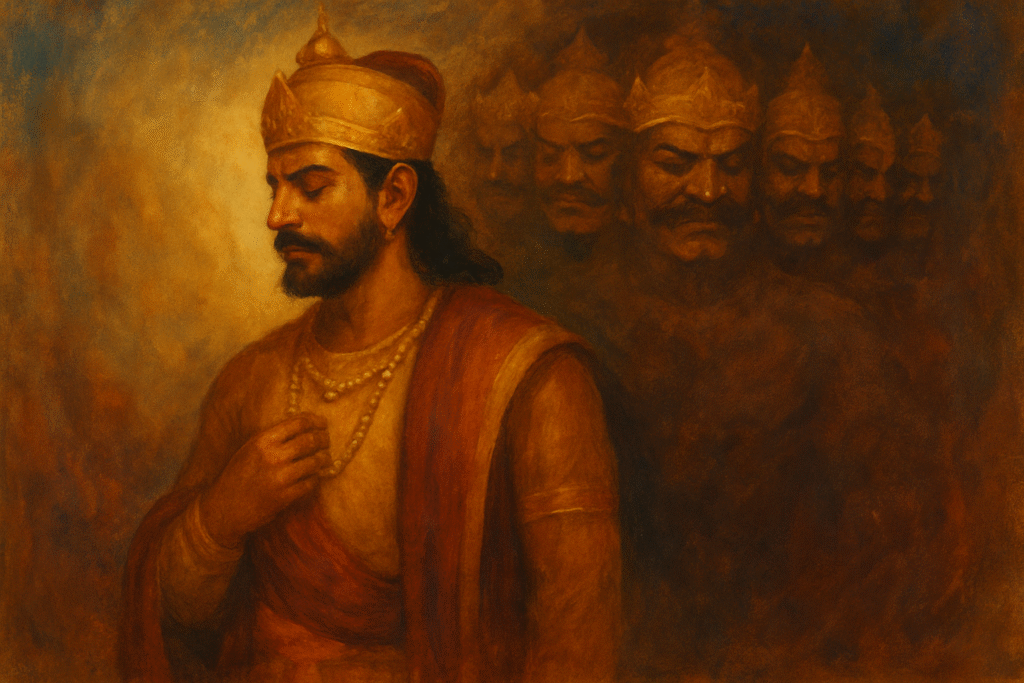
Even the most righteous minds are susceptible to the quiet infiltration of pride. Sri Swami Jyotirmayananda, the last direct disciple of Swami Sivananda, reveals the precise mechanism behind this spiritual downfall.
Through the timeless narrative of King Pratāpabhānu in the Tulsi Rāmāyaṇa, we observe how virtue without humility transforms into a demoniac nature. This is not merely a story of ancient kings, but a mirror reflecting the subtle Vedic psychology of ego.
The Allegory of Ignorance
The creation of Rāvaṇa is the allegorical representation of Avidyā, or profound ignorance. It illustrates how a noble ruler, universally loved and respected, can unknowingly cultivate the very qualities that lead to self-destruction.
When spiritual understanding is lacking, the mind becomes confused and shuts out higher wisdom. The masses generally ignore this internal process, allowing the demoniac nature to take root unchecked.
Mṛgayā: The Pursuit of Sensory Pleasures
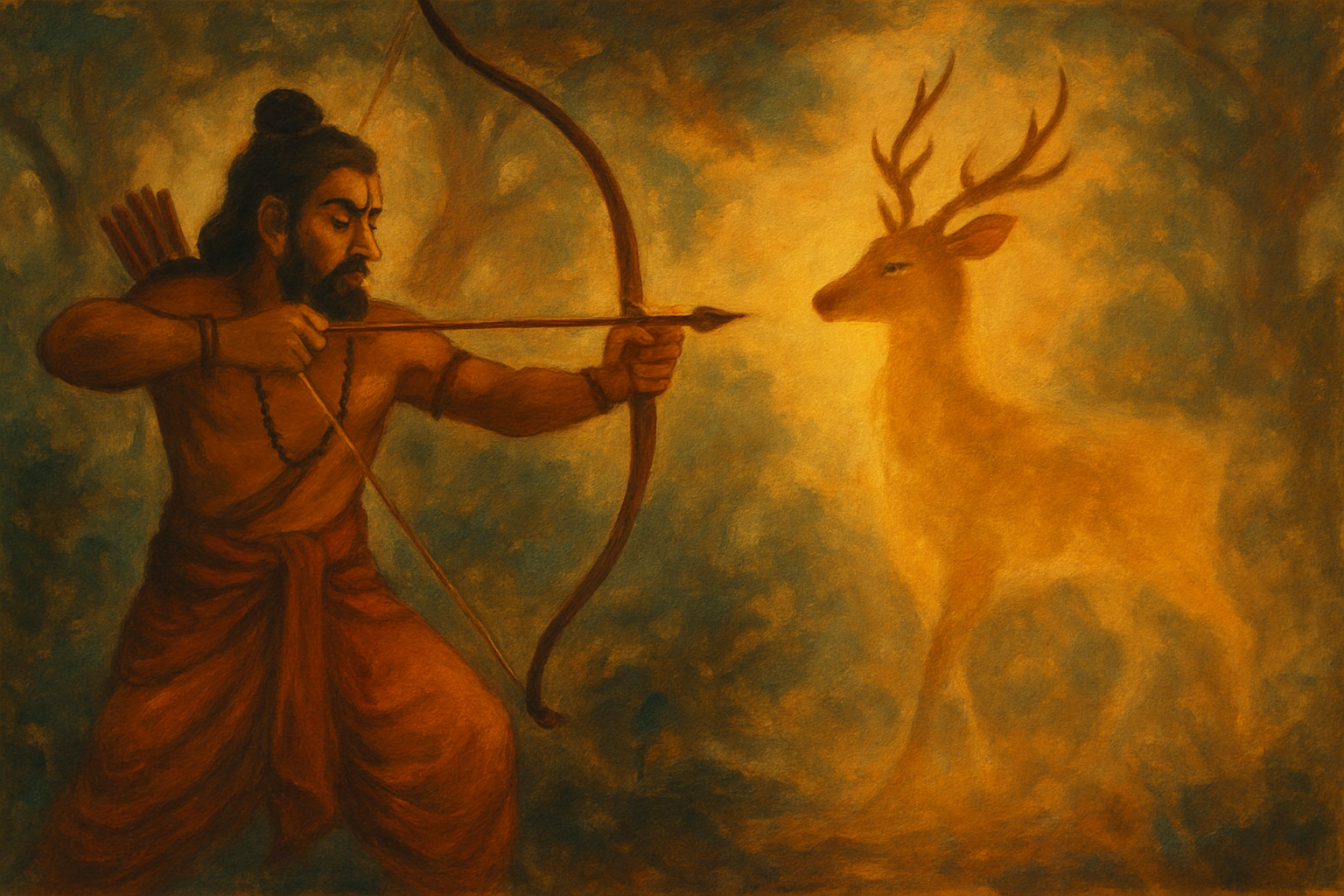
In the storyline, King Pratāpabhānu goes hunting, a practice known as Mṛgayā. Hunting serves as a powerful metaphor for our relentless pursuit of fleeting sensory pleasures.
Instead of seeking the ultimate joy of enlightenment, we often act like hunters chasing after objects that only bring temporary satisfaction. We look at the world to possess and control it, rather than seeing the divine expression of God in all things.
The Danger of Ego-Driven Ambition
Fascinated by a deceptive demon disguised as an ascetic, King Pratāpabhānu asks for a boon: to become the unobstructed ruler of the earth for a hundred kalpas. This audacious request exposes how his past virtuous acts had only served to inflate his ego.
True virtue must lead to humility, allowing the intellect to become free of vanity. When virtue merely builds a bully-like ego, it becomes the foundation for a demoniac nature and binds the soul to the cycle of birth and death.
Scholar’s Corner
- Primary Source:
- Tulsi Rāmāyaṇa
- Section:
- Bālakāṇḍa
- Reference:
- Dohā 162
Core Teaching: True spiritual practice requires absolute humility. Virtue that breeds arrogance is merely ignorance in disguise.
Glossary of Sanskrit Terms
- Avidyā:
- Spiritual ignorance; the root cause of the soul’s entanglement in worldly illusion.
- Mṛgayā:
- Hunting; allegorically representing the mind’s pursuit of external sensory pleasures.
- Vairāgya:
- Dispassion or detachment from worldly desires.
- Daivī-saṃpatti:
- Divine wealth or virtuous qualities that lead toward liberation.
This study guide is drawn from the archived teachings of Sri Swami Jyotirmayananda.
Hari OM Tat Sat!
This is great information and very useful for our daily growth. We really appreciate these notes and annotation of dear swamiji‘s precious words.
Kindly keep them coming as they help increase our Sadhana and improve our understanding of subtle issues and dealings in life.
Very grateful for this wonderful service.
Pranam 🙏🏽