From the Archives of Swami Jyotirmayananda
By Sri Swami Jyotirmayananda, the last direct disciple of Swami Sivananda
The human experience is often defined by a relentless accumulation—of possessions, achievements, and identities. We treat our lives like a mathematical equation, adding up our bodily experiences and psychological sentiments, believing this sum constitutes our reality. However, the Yoga Vasistha (Sthiti Prakarana, Section 56) offers a radical corrective: these accumulations are illusions. The source behind them—the Atman—is the only reality.
The mind constantly seeks to categorize the world as either strictly “real” or “unreal.” Vedanta offers a more nuanced view: the world is Anirvachaniya—indescribable.
It is neither fully existent (because it changes and perishes) nor non-existent (because we experience it).
Just as a dream feels perfectly real while we are dreaming, the waking world feels concrete while we are in it. It is only upon waking that the dream is recognized as an illusion. Similarly, spiritual awakening reveals that the “me and mine” which dominates our waking life is ego-based fiction.
The Three Bodies and the Instrument
We are often trapped in the belief that “I am this body.” Yet, biological science and spiritual insight agree: the physical body is in a state of constant flux. Every few years, every cell is replaced. The body you inhabit today is not the body you were born with.
If the body is constantly changing, how can it be You? Swamiji reminds us to view the physical body as an instrument:
- Physical Body: The gross vehicle.
- Subtle Body: The mind, intellect, ego, and vital forces.
- Causal Body: The seed state of ignorance.
The intellect is merely equipment, like a telescope. You are the observer looking through the telescope, not the lens itself.
The Analogy of the Reflected Sun
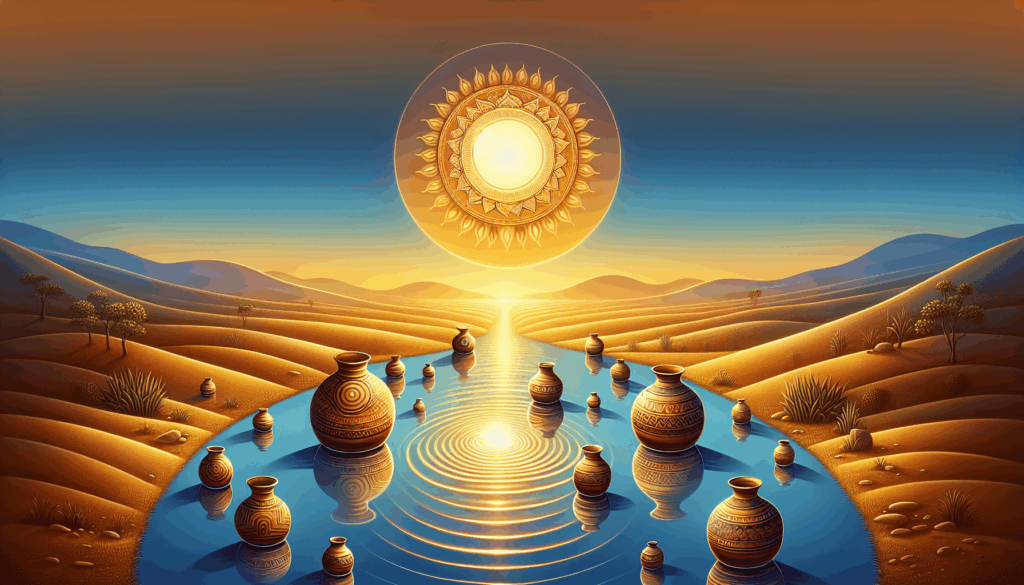
To understand the relationship between the individual soul (Jiva) and the Absolute (Brahman), the scriptures use the analogy of the sun reflected in jars of water.
- The Sun: Represents Brahman (The Absolute), which remains detached and untouched.
- The Reflection: Represents the Jiva (Individual Soul).
- The Water: Represents the mind/intellect.
If a fish disturbs the water in one jar, the reflection shakes, but the Sun in the sky remains steady. Similarly, the adversities of life may agitate your mind, but they cannot touch your true Self.
The Sky Untouched by Clouds
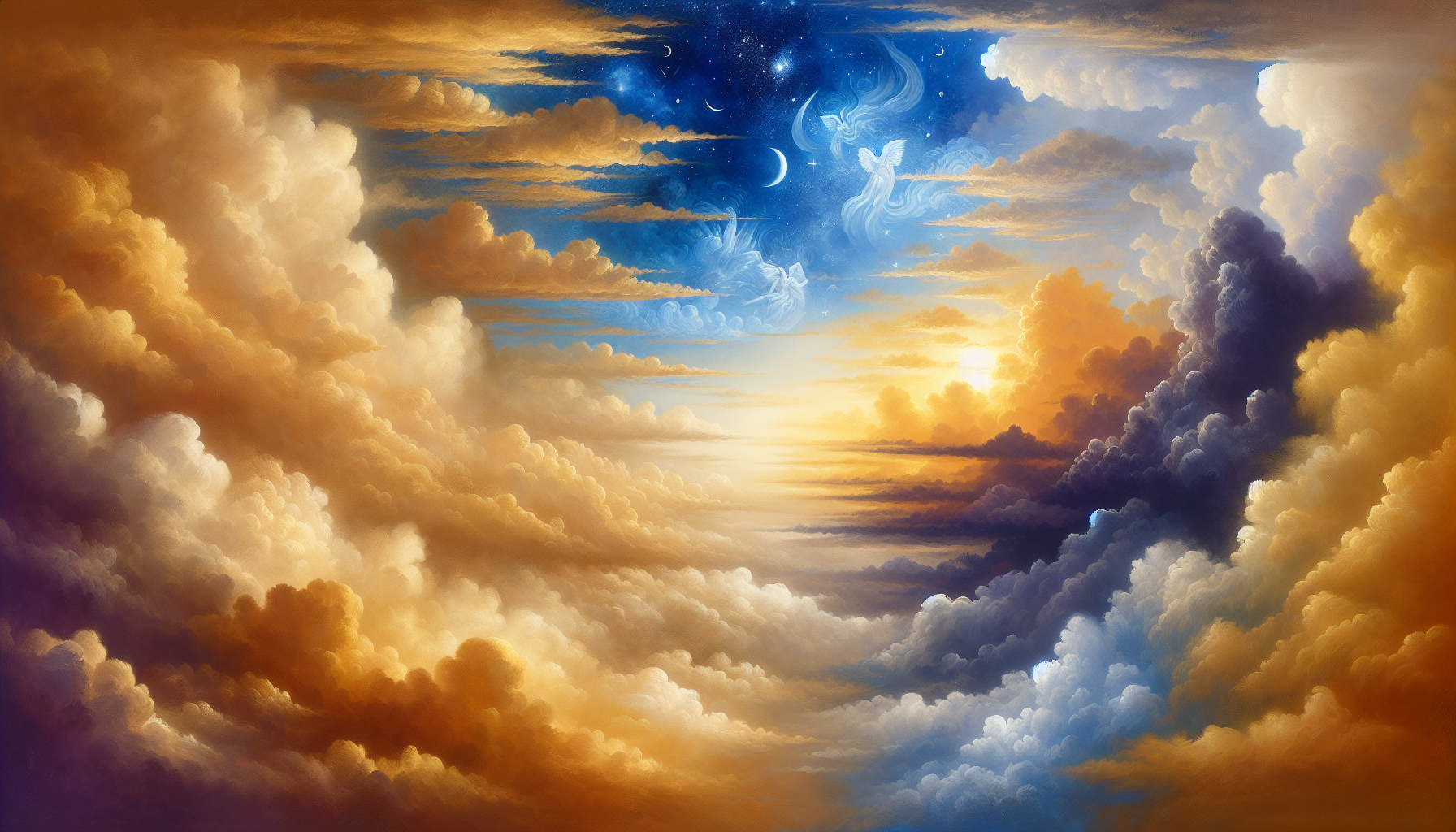
Consider the sky. It hosts storms, clouds, and bright sunshine. Yet, the sky itself is never wet, never burned, and never scarred. It allows all phenomena to pass through it while remaining distinct from them. This is the nature of the Atman. It sustains the world process but remains absolutely detached from it.
Scholar’s Corner: Scriptural Citations
- Yoga Vasistha, Sthiti Prakarana, Section 56: “O Rama, having ascertained the fact that this world does not exist (as absolute reality), you should negate the sense of I-ness and mine-ness.”
- The Mantra: “Namah” (Na-Mah) – Not me, not mine. All is Divine.
Glossary of Terms
- Anirvachaniya:
- Indescribable; the status of the world as neither absolutely real nor unreal.
- Sattva Vichar:
- Pure reflection; exercising the mind to understand Reality.
- Moha:
- Deluded attachment.
- Bhavana:
- Feeling or attitude of the mind.
Watch the full lecture here: https://youtu.be/C7i3IvKWEdM
Join the Digital Sangha: https://bit.ly/4dgDWKn