
Sri Swami Jyotirmayananda, the last direct disciple of Swami Sivananda, offers profound insight into the mechanics of human suffering and inner peace. Through his vast mastery of Vedantic philosophy, he awakens the divine within us, guiding sincere seekers away from anxiety and toward ultimate reality.
In our modern era, stress, doubt, and fear frequently dominate our internal landscapes. We attach ourselves to passing thoughts and external circumstances, mistaking the temporary for the eternal. The ancient cure for this modern symptom is found in the profound verses of the Yoga Vasistha. By understanding the mind as a mere reflector of pure consciousness, we can un-mind the mind and experience true serenity.
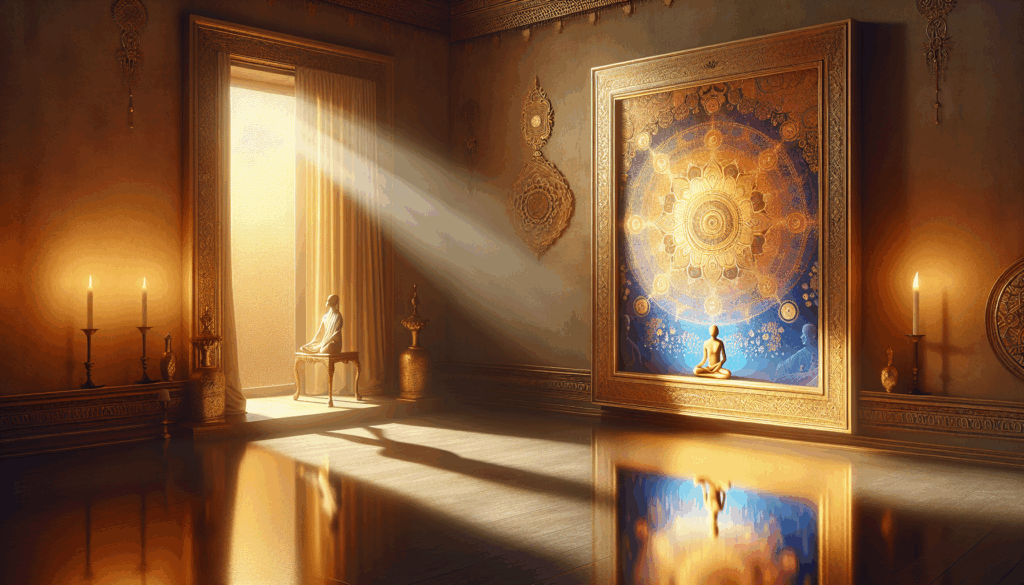
Swamiji beautifully illustrates the relationship between the soul and the mind using the analogy of the sun and a mirror. Imagine a room with a large wall mirror. A ray of sunlight enters through the window and reflects off the mirror, illuminating the entire room. That reflected light gives a sense of reality to the pictures and objects it touches.
The sun is the Self (Atman), and the mirror is the mind. Every individual has a mind that reflects the light of consciousness, creating a personalized world. Each “reflected sun” experiences its own unique reality, filled with personal problems and illusions. However, the true source of all light is the sun itself, which remains completely independent of the mirrors. To find peace, we must shift our attention from the scattered reflections back to the illuminating source.
The Power of Affirmation
Spiritual movement requires a firm foundation in positive understanding. Swamiji emphasizes the importance of affirmation (Nishchay Karna) in daily life. This practice dates back to ancient times, illustrated by the story of Queen Madalasa. She would rock her infant to sleep not with ordinary lullabies, but with profound Vedantic truths, chanting: “Suddhosi, Buddhosi, Niranjanosi” (You are pure, you are enlightened, you are taintless).
By repeatedly impressing positive, spiritual truths upon our minds—affirming “I am not the body, I am Satchitananda”—we begin to weaken the grip of negative illusions. Positive affirmation acts as a powerful method to align the heart and intellect with the reality of pure consciousness.
The Cinema Screen of Life
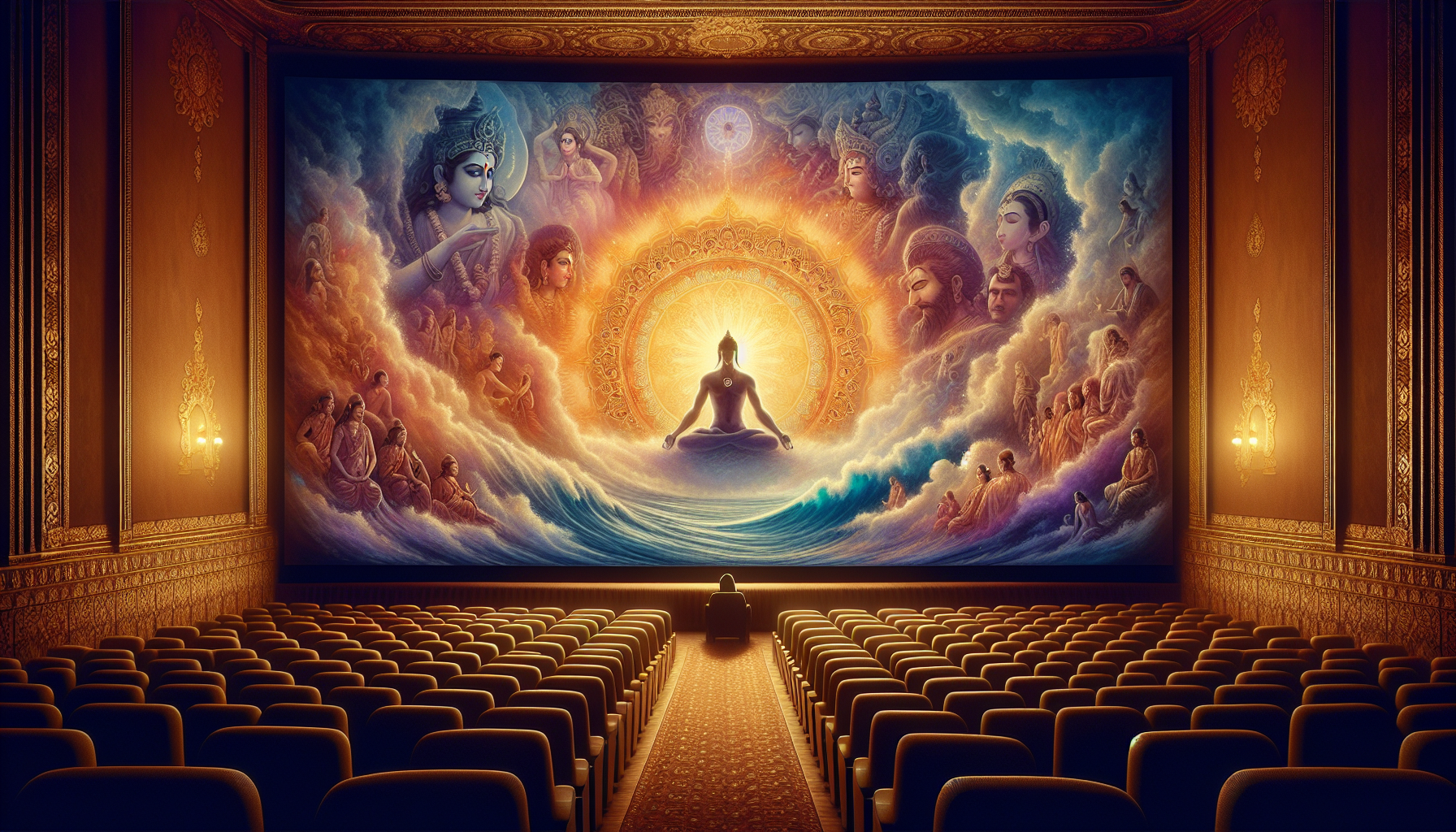
When you watch a film, you can easily become entirely absorbed in the drama, the terrifying scenes, and the emotional fluctuations playing out before your eyes. You forget the screen completely. The projections play a proxy part, and your eyes wander through illusions that have nothing to do with the blank, unaffected canvas behind them.
The mind operates in the exact same manner. Guided by past impressions and future expectations, it projects a world of duality. The pure, serene awareness of the Self acts as the screen, completely untouched by the drama projected upon it. Recognizing this distinction allows a seeker to remain relaxed and anchored, even when the projected movie of life becomes turbulent.
Brahmakara Vritti
If you sit by the ocean, you might fixate on a single wave, watching it rise and fall. When your mind moves from wave to wave—object to object—this is known as Vishayakara Vritti. It is the process of dealing with the endless, fragmented aspects of the material world.
Alternatively, you can relax your vision and look at the ocean as a whole. You realize that every wave is fundamentally just water. This encompassing, unitive vision is Brahmakara Vritti. When you remove the veil of ignorance, you do not just see isolated objects; you recognize that all is sustained by the reality of Brahman.
Scholar’s Corner
This teaching is drawn directly from the Yoga Vasistha, specifically within the Upashama Prakarana (The Section on Inner Peace), Section 13. The text meticulously details how the mind, devoid of the Self, is inert. It is only the light of the Self reflecting in the mind that renders it active. The cessation of worldly suffering is achieved not by rearranging the reflections, but by turning toward the pure light of Chit (Consciousness).
Glossary of Vedantic Terms
- Brahman: The absolute, infinite reality; the Supreme pure consciousness.
- Satchitananda: Existence (Sat), Consciousness (Chit), and Bliss (Ananda); the nature of the true Self.
- Jiva: The individualized soul, identified with the mind and body.
- Vritti: A thought-wave or mental modification.
- Brahmakara Vritti: The ultimate thought-wave that takes the form of Brahman, leading to enlightenment.
- Vishayakara Vritti: A thought-wave that takes the shape of a material object or worldly desire.
- Moksha: Ultimate liberation from the cycle of birth and death.
- Prarabdha: The portion of past karma currently bearing fruit in this present life.
- Sancita: The accumulated storehouse of all past actions and impressions.
This study guide is drawn from the archived teachings of Sri Swami Jyotirmayananda.