
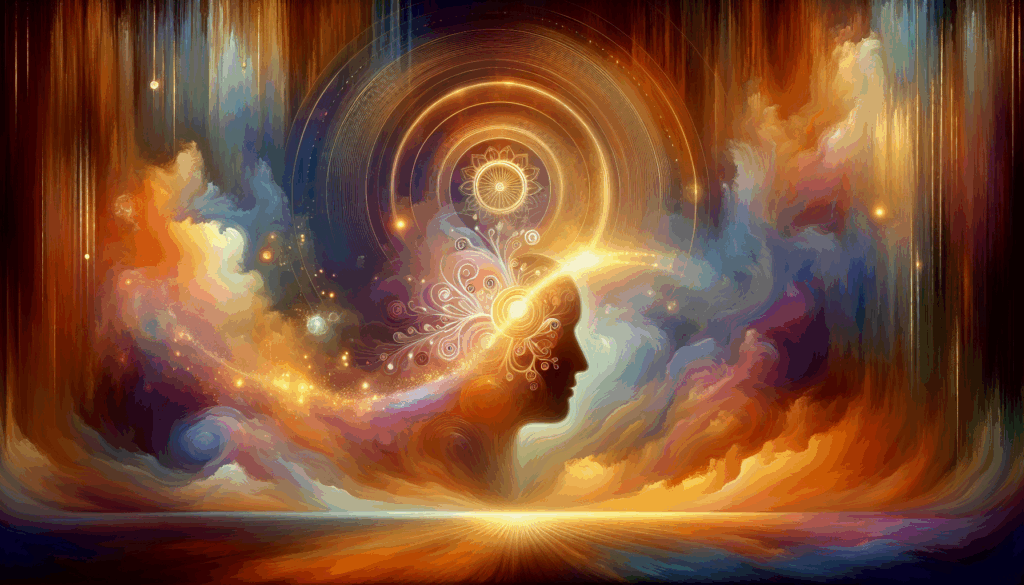
When modern life leaves you feeling crushed under the weight of material obligations, stress, and anxiety, the physical world can appear as an oppressive, unyielding force. However, Sri Swami Jyotirmayananda, the last living direct disciple of Swami Sivananda, offers a truly profound shift in perspective. Drawing from the ancient wisdom of the Yoga Vasistha, Swamiji reminds us that the material world we view as so solid and permanent is completely dependent on our own awareness.
Swamiji presents a flawless, logical argument regarding the nature of existence, referring to it as the "mathematics" of reality. He asks: what could possibly exist other than consciousness? Any entity outside of consciousness would inherently be inert. Yet, you need consciousness to even recognize that something is inert. Therefore, the existence of anything outside of consciousness is an absolute impossibility. The idea that there is inert matter separate from the Self is entirely erroneous, because without consciousness, matter cannot be known to exist.
The Cloud Metaphor: Understanding the Mind
To help spiritual seekers grasp this elusive concept, Swamiji uses the brilliant metaphor of a cloud. A cloud appears to have form, but it is merely vapor clinging to subtle particles of dust. It has no solid reality. Just as a cloud disperses and leaves no trace when the sun's rays pass through it, the mind also loses its grip when illuminated by the light of true awareness. The very question of conquering the mind is itself an illusion created by the mind.
The Three Chains of Craving (Eshanas)
As long as an individual depends upon the objects of the world, they remain dominated by the mind. Swamiji explains that this bondage is fueled by three main types of desire, known as Eshana:
- The craving for progeny (Putreshana)
- The craving for wealth and resources (Vitteshana)
- The craving for worldly fame and attention (Lokeshana)
When these desires intensify, they become trishna (craving), which keeps the soul trapped in the illusion of finding lasting stability in a physical complex.
The Dog in the Barber Shop: Multiplicity and Fear
How does the ego create a world of such immense turmoil out of pure consciousness? Swamiji illustrates this through a parable about a dog entering an old-fashioned barber shop filled with parallel mirrors. Believing it is alone, the dog looks into a mirror and sees what it thinks is another fearsome dog. As it turns its head, the parallel mirrors create reflections within reflections. What was initially one dog suddenly appears as countless dogs, creating unimaginable fear and aggression out of nothing but an illusion.
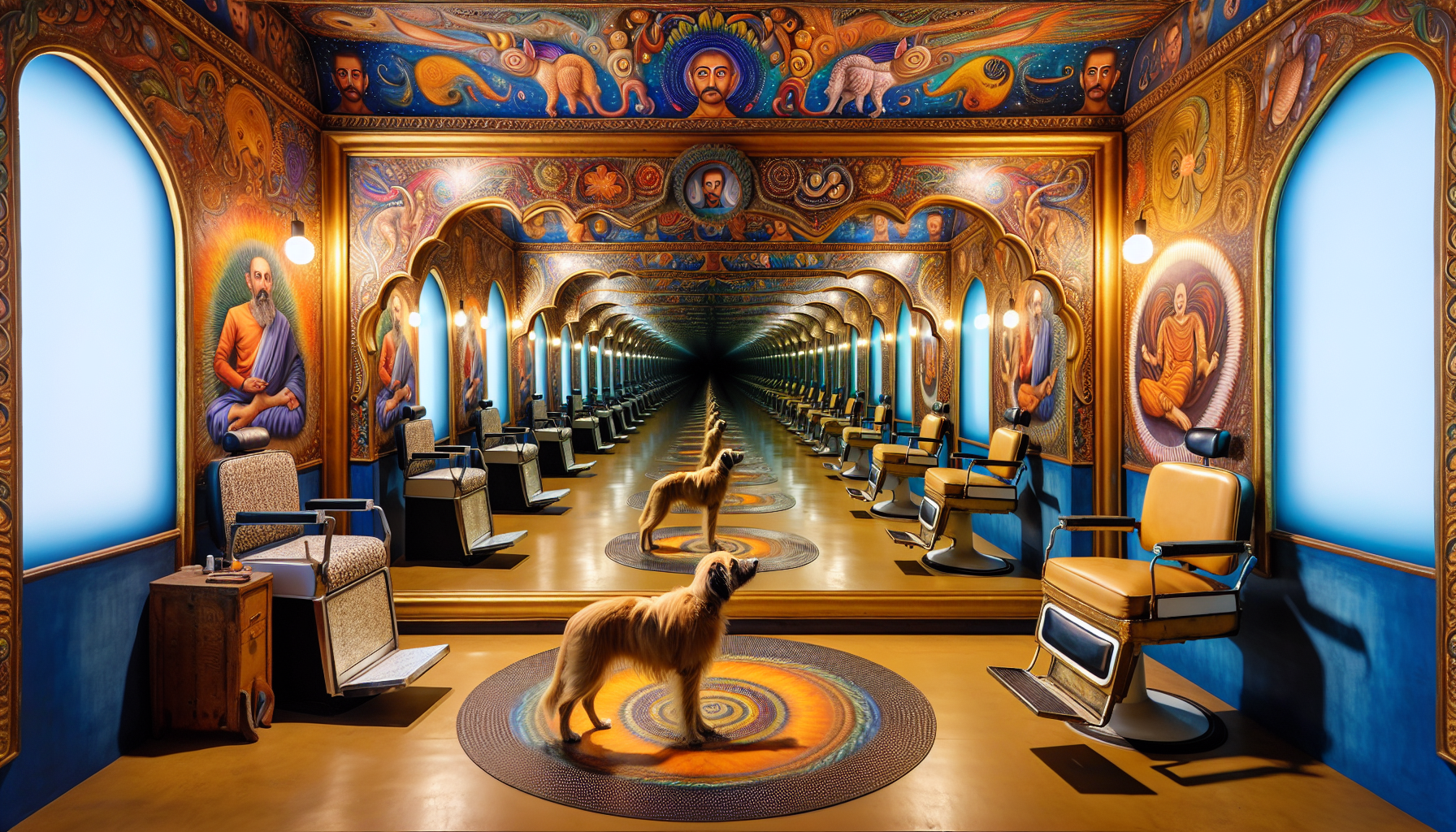
This is exactly how the singular "I" (Aham) becomes scattered into a chaotic world of multiplicity and turmoil (Meham).
By recognizing that the entire cinema show of the world only exists because of the screen of pure consciousness, we can step back from the agitation. The more you develop spiritual enlightenment, the more you realize that the world will not be as real as you thought it was.
Scholar's Corner: Scriptural Citations
- Text: Yoga Vasistha
- Section: Upasham Prakarana (Section 14)
- Core Theme: Negating the mind and realizing that the Self alone exists.
Glossary of Terms
- Brahman:
- Pure consciousness; the absolute reality.
- Chitta:
- Awareness that has become involved in objectivity; the mind.
- Sankalpa:
- Unfulfilled desires or thoughts waiting to be fulfilled.
- Vairagya:
- Spiritual dispassion; non-attachment to the material world.
- Jnata, Jneya, Jnana:
- The knower, the known, and pure knowledge.
Watch the full discourse: https://youtu.be/jFAJaCGEUwQ
Join the Community: https://bit.ly/4dgDWKn
This study guide is drawn from the archived teachings of Sri Swami Jyotirmayananda.